Village Hall Veritas: Why Amateur Theatre Tells Britain's Truest Stories
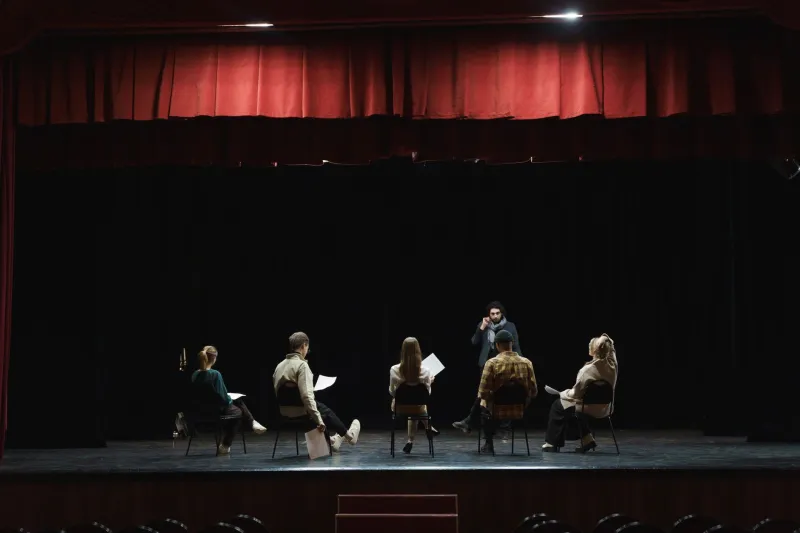
Village Hall Veritas: Why Amateur Theatre Tells Britain's Truest Stories
Let us begin with an admission that the British arts establishment has long been reluctant to make: the most honest theatre in this country is not happening at the National, nor at the Donmar, nor in any of the subsidised regional houses whose programming is scrutinised each season for signs of cultural significance. It is happening in draughty village halls, church annexes, and converted school gymnasiums, performed by accountants and retired teachers and postmen who have memorised their lines in the gaps between everything else life requires of them.
This is not a sentimental claim. It is a structural one. And understanding why it is true requires us to think carefully about what theatre is actually for, and who, in practice, it serves.
The Condescension Problem
Amateur dramatics occupies a peculiar position in Britain's cultural self-image. It is simultaneously ubiquitous and invisible — practised by hundreds of thousands of people, yet almost entirely absent from the critical conversation about what British theatre is and does. When it does receive attention, that attention tends to be affectionate in a way that is difficult to distinguish from condescension: the gentle smile at the wobbly set, the fond acknowledgement of the brave soul who forgot their lines in Act Two. The implicit message is that this is charming, but not quite real.
This attitude reveals more about the commentators than the form. The assumption that authenticity in theatre requires professional training, institutional affiliation, and a London postcode is not an aesthetic judgement. It is a class judgement, dressed in the language of quality. British culture has always been adept at this particular manoeuvre.
The Amateur Dramatic Club of Cambridge, founded in 1855, is the oldest surviving amateur dramatic society in the world. The British amateur theatre movement is not a pale imitation of professional practice; it is, in many respects, the root from which professional practice grew. To condescend to it is to condescend to the history of British performance itself.
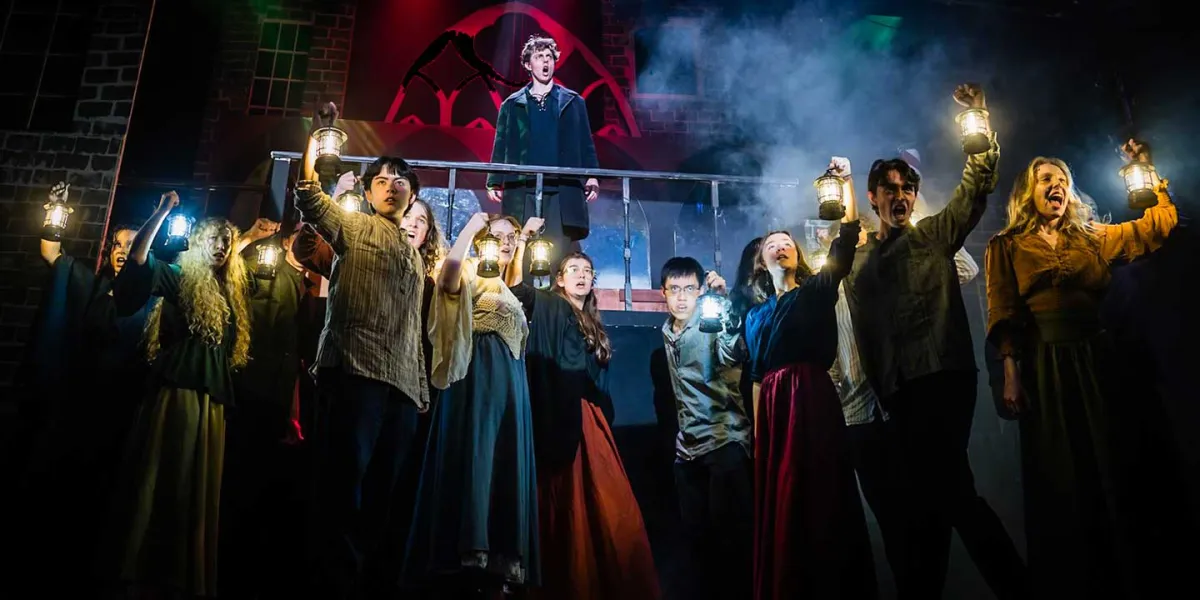 Photo: The Amateur Dramatic Club of Cambridge, via www.philanthropy.cam.ac.uk
What Gets Chosen, and Why It Matters
The repertoire of Britain's amateur companies is one of the most underanalysed cultural datasets available to us. What a dramatic society chooses to perform — and equally, what it chooses not to perform — is a document of extraordinary richness, encoding the preoccupations, tolerances, and blind spots of a particular community at a particular moment.
The pantomime remains the dominant form, and its dominance is itself significant. The panto is not merely entertainment; it is a ritual of communal self-recognition, dependent for its effects on shared reference points, local knowledge, and the audience's willingness to see themselves reflected in the performance. When the dame makes a joke about the new bypass or the closure of the post office, the laughter is not simply at the joke but at the recognition — the pleasure of seeing one's own life acknowledged as worthy of theatrical attention. This is something that a production of Hamilton at the Victoria Palace cannot provide, however brilliantly it is staged.
 Photo: Victoria Palace, via c.victoria-palace.cz
Beyond pantomime, the amateur circuit has long favoured Agatha Christie, Alan Ayckbourn, and the domestic comedies of writers such as Ray Cooney — a repertoire that professional critics have tended to treat as evidence of conservative taste. But this analysis misses the point. Ayckbourn's comedies, in particular, are devastating examinations of middle-class British life: its evasions, its cruelties, its quietly catastrophic emotional illiteracy. When performed by a company drawn from the very communities Ayckbourn is describing, the effect is something that professional productions rarely achieve — a sense that the stage and the audience are genuinely continuous with one another.
The Unguarded Mirror
Professional theatre, for all its virtues, is a mediated form. It passes through the filters of literary managers, directors with careers to consider, funding bodies with strategic priorities, and critics whose responses will shape the work's reputation. Each of these filters has a tendency to smooth away the rough edges, to translate lived experience into something more palatable, more universal, more suitable for export.
Amateur theatre operates under different pressures. The company must satisfy its own members, its local audience, and the constraints of its budget — but it is largely free from the institutional anxieties that shape professional programming. This freedom produces, at its best, a kind of unguarded honesty that professional theatre struggles to replicate. The amateur company performing a murder mystery in a Shropshire village hall is not making a statement about the state of British drama. It is simply trying to entertain its neighbours, and in doing so, it reveals something about what those neighbours find entertaining, frightening, funny, and true.
The choices that reveal most, however, are not the safe ones. Across Britain, amateur companies have been quietly expanding their repertoire — tackling Lorraine Hansberry, staging new writing by local playwrights, and occasionally producing work that addresses the specific circumstances of their communities with a directness that would give a professional literary manager pause. A community theatre in a former mining town staging a new play about the aftermath of pit closures is not making an aesthetic statement. It is bearing witness. The distinction matters.
Censorship and Self-Censorship
Equally revealing are the moments when amateur companies pull back. The decision not to stage a particular play — because it contains material that might alienate the regular audience, because it touches on something too raw in the community, because the committee does not feel it is quite them — is a form of cultural self-portraiture as honest as any artistic choice. Amateur theatre cannot afford to alienate its audience, because its audience is also its membership, its funding base, and its social world. The pressure to self-censor is, paradoxically, a form of accountability that professional theatre rarely faces.
This is not always comfortable. Amateur companies in certain communities have been known to avoid plays that deal with race, sexuality, or class in ways that might provoke division. These omissions are themselves data points — evidence of where the community's fault lines run, and which conversations it is not yet ready to have in public. Professional theatre, shielded by its institutional distance, can afford to stage the challenging work and declare it important. Amateur theatre must live with the consequences.
Taking the Form Seriously
The argument here is not that amateur theatre is better than professional theatre. It is that amateur theatre is different in ways that matter, and that those differences have been systematically undervalued by a critical culture that equates quality with professionalism and significance with institutional endorsement.
If we genuinely wish to understand what Britain thinks about itself — its humour, its grief, its aspirations, its evasions — we would do well to spend less time in the stalls of the National Theatre and more time in the plastic chairs of the village hall. The performances may be rougher. The lighting rigs may leave something to be desired. But the lines being crossed — between performer and audience, between art and community, between the stage and the street outside — are real in a way that the most technically accomplished professional production cannot always claim.
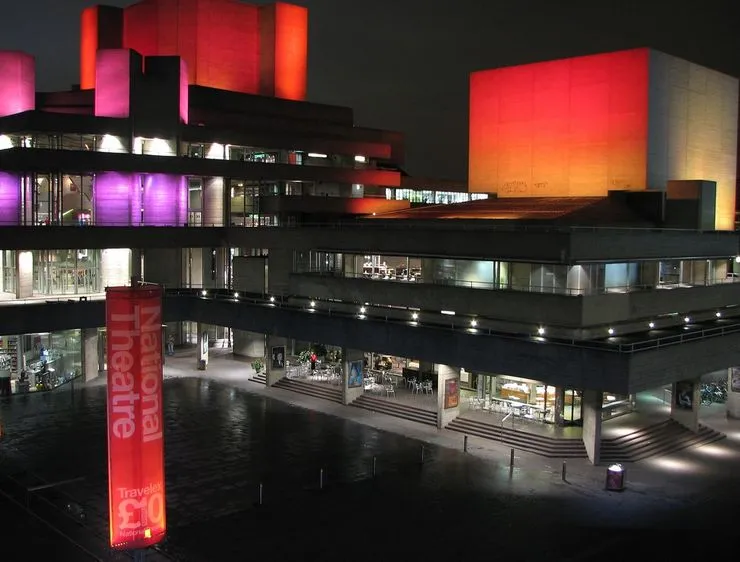 Photo: National Theatre, via cdn.tourbytransit.com
Britain's amateur dramatists are holding a mirror up to the nation. It would be worth, for once, looking into it without flinching.