The Faithful Copy: Britain's Devotion to the Second Time Around
The Faithful Copy: Britain's Devotion to the Second Time Around
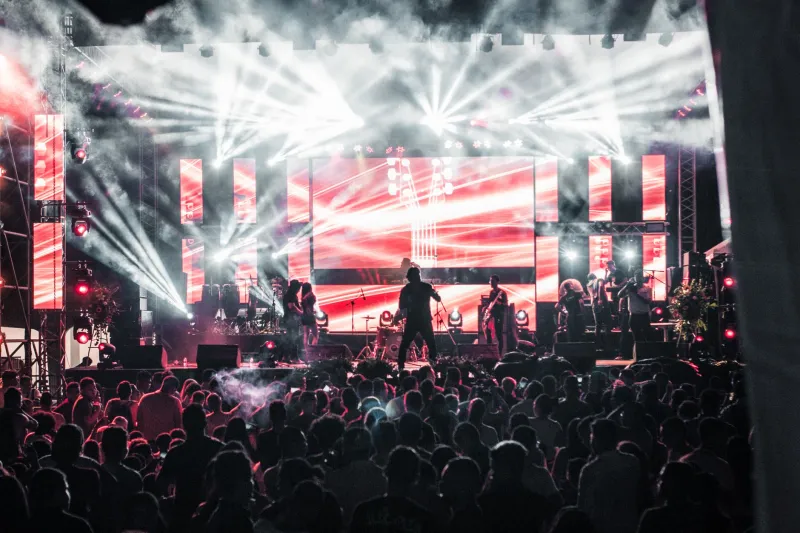
Let us begin with a scene familiar to anyone who has attended a summer festival in this country. The headline act takes the stage. The crowd surges forward. The opening notes of a song land and the air fills with recognition, with relief, with something approaching joy. The band is not, of course, the band. The singer did not write these songs. The drummer was not born when the original recording was made. And yet — and this is the part worth interrogating — none of that appears to matter. The experience is, for the audience assembled in a field in Derbyshire or on a seafront in Weston-super-Mare, entirely sufficient.
Britain's relationship with the tribute act is one of the more curious features of its contemporary cultural landscape. It is vast, it is commercially robust, and it is almost entirely unexamined. We tend to treat it as a footnote to the real thing — a symptom of nostalgia, perhaps, or of an entertainment industry that has learned to monetise memory rather than manufacture novelty. But this reading is, I want to suggest, both uncharitable and analytically lazy. The tribute phenomenon is not a cultural accident. It is a cultural choice, and choices of this scale and consistency tend to mean something.
The Grammar of the Second Version
The tribute band is only the most visible expression of a much broader appetite. Consider the literary estate that authorises a continuation of a beloved novel series — the Agatha Christie properties that generate new Poirot investigations, the Ian Fleming estate that has periodically sanctioned new Bond novels, the recent and contentious authorisation of a Winnie-the-Pooh continuation. Consider the film industry's fondness for the remake, the reboot, the reimagining — terms that do considerable work to distinguish between different grades of the same basic impulse. Consider the theatre's perennial appetite for the classic revival, the faithful staging of the canonical text, the production that announces itself as a restoration rather than an interpretation.
What links these phenomena is not simply commercial logic, though commercial logic is certainly present. It is a particular relationship to the original — reverential, possessive, and oddly anxious. The tribute act does not merely reproduce the music; it performs fidelity to the music. The authorised sequel does not merely continue the story; it demonstrates that the story has not been abandoned. There is a quality of custodianship in all of it, a sense that the act of faithful reproduction is itself a form of cultural stewardship.
This is, when you examine it closely, a distinctly British posture. It combines a deep respect for precedent — that most English of intellectual virtues — with a corresponding reluctance to declare anything definitively over.
Endings We Refuse to Make
The philosopher Walter Benjamin wrote about the aura of the original artwork — that quality of singular presence that mechanical reproduction inevitably diminishes. Benjamin was broadly pessimistic about the consequences of this diminishment. But Britain's tribute culture suggests a different relationship to the copy: not the degradation of the original, but its perpetuation. The tribute band does not replace the Beatles. It keeps the Beatles alive — not as a living entity capable of surprise, but as a fixed and perfected object of devotion.
This is where the phenomenon becomes philosophically interesting and, perhaps, culturally revealing. There is a significant difference between keeping something alive and allowing it to end. The authorised sequel, the tribute act, the faithful remake — all of them resist the closure that genuine endings require. They insist that the beloved thing continues, even when continuation means surrendering the possibility of development.
One might argue that this is simply grief management — that audiences reach for the familiar because the familiar is comforting, and that comfort is a legitimate cultural need. This is true, as far as it goes. But it does not go far enough. Because what Britain's tribute culture also suggests is a particular anxiety about originality itself — a suspicion that the new thing will not measure up, that the second version is safer than the first attempt at something genuinely different.
Innovation by Rehearsal
And yet there is a counter-argument that deserves serious engagement. Britain has, historically, been extraordinarily good at innovation — but its innovations have frequently taken the form of radical recombination rather than wholesale invention. The British novel did not emerge from nowhere; it assembled itself from travel writing, epistolary tradition, and moral philosophy. British pop music did not invent itself; it absorbed and transformed American blues, Caribbean ska, and Indian classical music into something recognisably its own. The tradition of the cover version, in this light, is not the antithesis of creativity but one of its engines.
The tribute act, understood in this way, is a form of musical scholarship — a practice of deep listening that precedes, and sometimes enables, genuine creative departure. Many of Britain's most original musicians have passed through tribute bands, learning repertoire and craft before finding their own voice. The cover version is not where creativity goes to die; it is, sometimes, where it goes to train.
The same argument can be made for literary continuations, with somewhat more difficulty. The authorised sequel carries a weight of obligation that can be artistically stifling — the imperative to reproduce rather than reimagine. But the best examples of the form — and they exist, if one looks carefully — use the inherited architecture as a scaffold for something genuinely new, a way of entering a tradition through its own door rather than forcing an entrance.
The Originality Trap
There is, finally, a more uncomfortable question lurking beneath the tribute phenomenon, one that Britain's cultural establishment has been reluctant to confront directly. The premium placed on originality — on the singular voice, the unprecedented vision, the work that owes nothing to what preceded it — is itself a historical construction, and a relatively recent one. For most of literary and musical history, the reproduction, the variation, the continuation were not failures of imagination but demonstrations of mastery. Bach wrote variations. Shakespeare adapted sources. The notion that the truly valuable artwork arrives from nowhere, owing nothing, is a Romantic invention that the market has subsequently weaponised.
Britain's tribute culture may be, in part, an intuitive resistance to this mythology — a popular insistence that the relationship between an audience and a beloved work is not exhausted by the work's first appearance, and that the act of faithful repetition carries its own integrity and its own meaning.
Or it may simply be that we are, as a culture, genuinely frightened of endings. That the arena filling with people singing along to songs they have loved for forty years is not a tribute to the past but a refusal of it — a collective decision to remain, just a little longer, in the warmth of the known.
Both things, characteristically, can be true at once.