The Borrowed Mirror: What Britain's Library Loans Reveal When No One Is Looking

The Borrowed Mirror: What Britain's Library Loans Reveal When No One Is Looking
The bestseller list is, in most meaningful senses, a commercial document. It tells us which titles a publisher invested in, which authors a publicist fought for, which cover designs caught the eye of a supermarket buyer. It is useful data, but it is not, in any deep sense, a portrait of what Britain is actually reading — still less of why.
The public library is different. When a resident of Sunderland borrows a book about debt management, or when a cluster of libraries in post-industrial South Wales simultaneously records a surge in requests for titles about grief, no marketing budget is responsible. The transaction is private, need-driven, and — in aggregate — extraordinarily revealing.
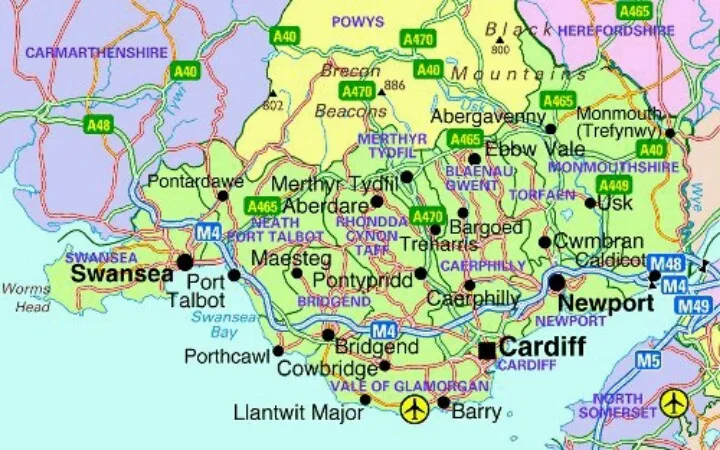 Photo: South Wales, via i.pinimg.com
Public lending data, where it is made available through Freedom of Information requests and annual reports from library authorities, constitutes one of the most underutilised archives of social intelligence in the country. What it shows, when read carefully, is an emotional geography of Britain that cuts directly across the grain of the official cultural narrative.
The Counter as Confessional
There is something quietly radical about the library borrowing counter. Unlike the bookshop till, it carries no social performance. A person purchasing a self-help title in a high street shop is visible; a person borrowing the same title from a library branch is, for all practical purposes, invisible. The library has always offered this gift — the freedom to need something without being seen to need it.
This invisibility is precisely what makes the data so valuable. When lending records from northern English library authorities show sustained, multi-year growth in borrowing of titles related to financial hardship, housing instability, and welfare navigation, this is not a publishing trend. It is a social one. The books are not being borrowed because they were reviewed in a Sunday supplement. They are being borrowed because people require them.
A similar pattern emerges around mental health literature. Across numerous library authorities — particularly those serving areas with reduced access to NHS talking therapies — borrowing of titles addressing depression, anxiety, and trauma has risen markedly over the past decade. The library, in these communities, is functioning as a first-responder to psychological need. It is doing so quietly, without fanfare, and on a budget that has been cut to the bone.
Geography as Feeling
Perhaps the most striking feature of regional lending data is the degree to which it maps onto events that the communities in question have lived through rather than events that the national media has chosen to cover.
In the aftermath of the 2008 financial crisis, libraries in areas most severely affected by unemployment and repossession recorded significant increases in borrowing across several categories: practical guides to employment law and debt restructuring, certainly, but also — and this is the detail that catches the attention — fiction. Specifically, fiction dealing with loss, displacement, and the struggle to maintain dignity under economic pressure. Titles by writers such as Lynda La Plante, Melvyn Bragg, and Barry Hines circulated with renewed urgency in communities that recognised their own experience in the pages.
This is not coincidence. It is the mechanism by which literature performs one of its oldest and most essential functions: the confirmation that one's suffering is not unique, that it has been witnessed and named, that it exists within a human tradition rather than as private failure. The library facilitates this confirmation without requiring anyone to explain themselves.
More recently, lending patterns around Brexit and the pandemic have been equally legible. Libraries in areas that voted heavily to leave the European Union recorded notable increases in borrowing of titles addressing national identity, sovereignty, and historical Britishness — not in a triumphalist register, but in the register of people searching for a story that makes sense of where they find themselves. Meanwhile, the early months of the pandemic produced a lending spike in long-form fiction of the kind that demands sustained attention: Victorian novels, multi-volume series, translated European literature. The data suggests that, when confronted with genuine uncertainty, Britain's library users reached not for distraction but for depth.
The Titles That Never Trend
One of the more uncomfortable revelations of public lending data is the persistent, year-on-year borrowing of titles that never appear on any cultural radar — books that have quietly circulated in working-class communities for decades, that are worn to their spines through repeated handling, that no literary editor has written about in recent memory.
Catherine Cookson remains among the most borrowed authors in British library history, a fact that sits with curious discomfort alongside her near-total absence from serious literary discourse. Her readership is not niche. It is enormous, loyal, largely female, largely working-class, and largely ignored by the cultural institutions that claim to take reading seriously. The library counter knows this. The broadsheet review pages do not.
 Photo: Catherine Cookson, via m.media-amazon.com
The same pattern holds for certain genres — large-print editions of popular romance, practical guides to allotment gardening, local history pamphlets produced by community archives — that circulate in volumes the literary establishment would find startling. These are not guilty pleasures. They are the reading lives of people whose reading lives are considered insufficiently interesting to document.
Crisis as Catalogue
If the charity shop shelf, as Crossed Lines has previously explored, reflects the past selves we have discarded, the library counter exposes something more immediate and more vulnerable: who we are in the moment of need, when the performance has dropped and the requirement is simply for something that helps.
The surges in borrowing that accompany local crises — a factory closure, a flooding event, a scandal that implicates local institutions — tell a story about how communities process trauma through narrative. Fiction and non-fiction blur in these moments; what matters is not genre but function. People borrow what they require.
Britain's public libraries have survived decades of underfunding, closures, and the persistent cultural condescension that frames them as charming relics rather than essential infrastructure. Their lending data, accumulated across millions of transactions, constitutes an archive of genuine need that no other institution has thought to maintain. It is a record of the country as it actually is, rather than as it presents itself.
Reading that record is not comfortable. It discloses anxieties that the official cultural narrative prefers to leave unacknowledged, communities whose reading lives have never been treated as worth examining, and a relationship between literature and survival that the literary establishment has largely failed to honour. The library counter, it turns out, has been keeping the most honest account of all.