Letters to Nowhere: The Hidden Archive of Britain's One-Sided Celebrity Romance
The Archaeology of Adoration
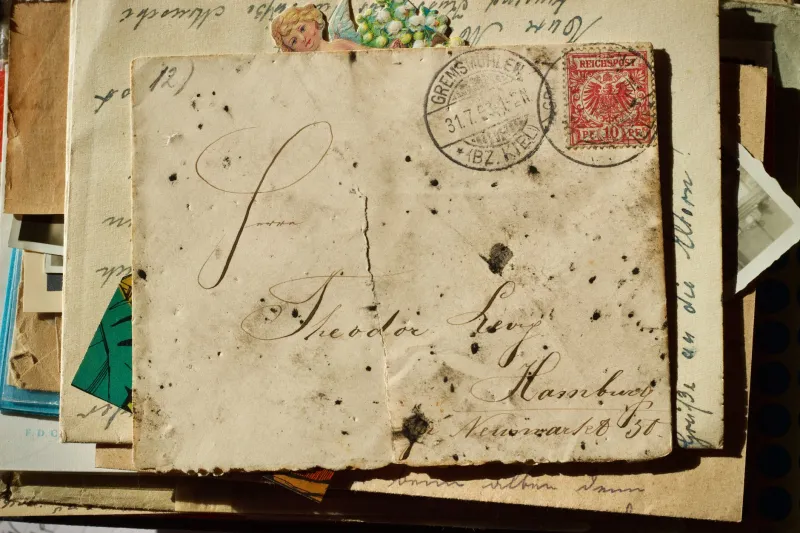
In a storage facility outside Birmingham, cardboard boxes contain thousands of letters that were never meant to be read. Addressed to David Bowie, Kate Bush, and members of Duran Duran, these missives represent one half of a conversation that defined British celebrity culture for decades. The letters speak of loneliness and longing, of teenage bedrooms papered with magazine clippings, of the peculiar intimacy that flourished between strangers separated by fame.
 Photo: Kate Bush, via www.gesundheitsinformation.de
 Photo: David Bowie, via i.pinimg.com
These documents are emerging now from estate sales and archive donations, offering researchers an unprecedented window into the emotional mechanics of pre-digital stardom. What they reveal challenges conventional narratives about celebrity worship, suggesting instead a complex ecosystem of projected intimacy that served psychological needs largely ignored by cultural critics.
The Grammar of Yearning
The language of fan letters follows predictable patterns, yet within these conventions lie remarkable expressions of human need. A 1979 letter to Morrissey begins: 'I know you probably won't read this, but I had to try.' The writer, a sixteen-year-old from Manchester, goes on to detail her struggles with depression, her sense of alienation from her peers, and her conviction that the singer alone understands her experience.
 Photo: Morrissey, via i.pinimg.com
This formula — acknowledgement of impossibility followed by desperate hope — appears across thousands of letters in newly accessible collections. The writers know their correspondence will likely go unread, yet they persist in the act of reaching out. The letter becomes less about communication than about the possibility of connection, a ritual performance of intimacy that requires no reciprocation to fulfill its function.
Linguist Ruth Wodak has identified what she terms 'parasocial grammar' in these texts — linguistic structures that create the illusion of mutual relationship through careful pronoun use and assumed shared knowledge. Writers deploy 'we' and 'us' to position themselves as confidants, whilst demonstrating intimate knowledge of tour dates, song meanings, and personal details gleaned from interviews.
The Industrial Romance
What emerges from these archives is evidence of celebrity culture as emotional infrastructure. The letters reveal fans constructing elaborate fantasy relationships that served genuine psychological needs: validation, understanding, and the sense of being special. For many writers, particularly young women, these imagined connections provided emotional support unavailable in their immediate environments.
The industrial scale of this phenomenon becomes clear when examining record company archives. EMI's files from the 1980s contain over 50,000 pieces of fan mail annually for major artists, suggesting millions of letters circulating through Britain's celebrity ecosystem. Each represents an individual act of emotional labour, yet collectively they constitute a parallel economy of feeling that operated alongside the commercial music industry.
The letters also reveal the gendered dynamics of celebrity worship. Male fans typically wrote about musical technique and career trajectory; female fans explored emotional connection and personal identification. These patterns reflect broader social expectations about emotional expression, with celebrity culture providing a sanctioned space for feelings otherwise discouraged.
The Curators of Intimacy
Record companies and management agencies developed sophisticated systems for processing this emotional outpouring. Professional letter-readers sorted correspondence into categories: requests for photographs, expressions of love, creative submissions, and what internal memos termed 'concerning content.' Form responses were crafted to acknowledge the writer whilst maintaining appropriate distance.
These industrial responses, now preserved alongside the original letters, reveal the careful choreography required to maintain celebrity mystique. Standard replies thanked fans for their 'lovely letter' whilst avoiding specific references that might suggest genuine personal attention. The form letter became a literary genre unto itself, designed to provide the illusion of individual response whilst processing thousands of identical needs.
Some artists resisted this system. Kate Bush insisted on reading all her mail personally until the volume became overwhelming; Morrissey reportedly kept particularly moving letters in his personal collection. These exceptions prove the rule: the celebrity-fan relationship required careful management to prevent the collapse of necessary boundaries.
Digital Disenchantment
The transition to social media has fundamentally altered this dynamic. The handwritten letter's journey through postal systems and management offices created temporal and spatial distance that enhanced its romantic appeal. Today's instant access to celebrities through Twitter and Instagram provides more interaction but less mystique.
Researcher Alice Marwick argues that digital platforms have replaced the 'productive distance' of fan letters with what she terms 'performed intimacy' — celebrities sharing personal details strategically rather than fans projecting intimacy onto distant figures. The algorithmic mediation of modern celebrity culture may provide more content but less emotional satisfaction.
The Archive of Feeling
These letter collections represent what cultural historian Ann Cvetkovich calls an 'archive of feelings' — documentary evidence of emotional experiences typically excluded from historical record. They preserve not just individual stories but the collective emotional landscape of pre-digital Britain, when celebrity culture operated through different mechanisms of desire and identification.
As these documents become available to researchers, they offer insights into questions that extend beyond celebrity studies: How do people construct meaning from mediated relationships? What psychological needs does parasocial intimacy serve? How has digital culture altered our capacity for sustained emotional projection?
The letters to nowhere may never have reached their intended recipients, but they have found their way to us — a generation seeking to understand how meaning was made before likes and shares quantified our emotional investments. In their beautiful futility, they preserve something essential about human need: the desire to be known, even by those who cannot know us back.