The Name Remains: Who Owns Britain's Streets and the Wars Fought to Rename Them
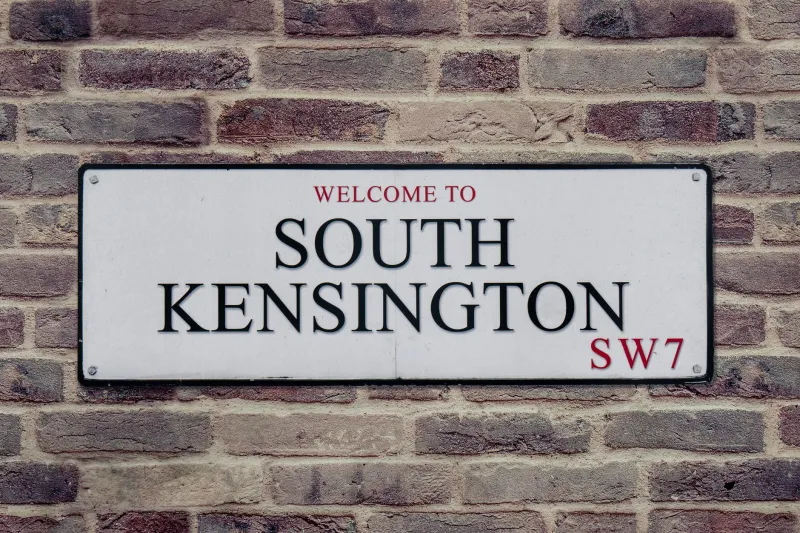
On a residential street in Bristol, a blue enamel sign reads Colston Avenue. Or it did, until a council vote, a petition, a counter-petition, a legal challenge, and several years of civic argument produced a replacement. The new sign stands now. The debate, however, does not. In Birmingham, in Edinburgh, in the market towns of the Home Counties, similar contests are playing out — quieter, perhaps, but no less charged. The question of what to call a street has become one of the most contested cultural questions in contemporary Britain, and the answer, it turns out, is never simply administrative.
Street names are a form of public inscription. They are, in the vocabulary of visual culture, a kind of permanent installation: authorised, institutionalised, and encountered daily by people who had no hand in their making. Unlike a statue, which can be seen from a distance and approached or avoided, a street name is inescapable if you happen to live on it. You write it on envelopes. You give it to taxi drivers. You type it into forms that ask for your address. The ideological content of that name enters your life whether you consent to it or not.
The Colonial Cartography
Many of Britain's oldest street names are, in a straightforward historical sense, colonial records. They commemorate merchants who profited from enslaved labour, military commanders who administered empire with violence, and philanthropists whose generosity was funded by exploitation. The names themselves are often elegant — Hawkins Street, Gladstone Road, Gordon Avenue — which is part of the problem. Elegance naturalises. It makes the historical claim seem neutral, even benign.
The campaign to rename such streets is not, as its critics sometimes suggest, an attempt to erase history. It is, rather, a dispute about whose history is being publicly commemorated and in what register. A street name does not explain its subject. It honours them. To live on Colston Road is not to be educated about Edward Colston; it is to be asked, implicitly, to inhabit a landscape that treats his legacy as worthy of permanent tribute. The distinction matters.
What is less often acknowledged is that renaming is itself a historical act — one that produces its own record. The controversy surrounding a renamed street becomes part of the street's history, layering meaning upon meaning. In this sense, the enamel sign is never a clean slate. It carries the ghost of what preceded it, at least for those who remember.
Gentrification's Quieter Cartography
Not all renaming battles are fought over colonial legacies. Some of the most revealing contests involve the subtler politics of gentrification, in which streets, districts, and postcodes are rebranded — often informally, sometimes officially — to attract investment or to distance a neighbourhood from associations considered commercially inconvenient.
The drift of London's estate agents has long provided a case study in this phenomenon. Areas once known by their own names acquire new appellations: Midtown, South Bank Village, Tech Quarter. These are not official renamings — no council votes are required — but they reshape the landscape nonetheless, erasing the granular specificity of place in favour of a marketable abstraction. The communities displaced by this process lose not only their homes but their addresses: the particular name that located them in a particular history.
In cities beyond London, the dynamic takes different forms. Former industrial districts acquire the names of the very factories their residents once worked in — The Loom Quarter, The Tannery — as those factories are converted into apartments. The name that once described labour becomes a lifestyle brand. The workers who bore that name daily, and whose bodies were shaped by the work it denoted, are not part of the commemorative logic.
Regional Identity and the Anglicisation of Place
In Wales, Scotland, and parts of Northern Ireland, the politics of naming is inseparable from the politics of language itself. The campaign to restore Welsh-language place names — or to ensure bilingual signage in communities where English-only signs have long prevailed — is a cultural and political act of considerable significance. A sign that reads Yr Wyddfa rather than Snowdon is not merely correcting a translation; it is asserting a prior claim, insisting that the landscape was named in a language that predates English administration by centuries.
These are not abstract disputes. The name by which a mountain or a village is known shapes the way it is imagined, marketed, and governed. English place names imposed during periods of administrative consolidation carried with them an implicit hierarchy — a suggestion that the anglicised version was the real one, and the Welsh or Gaelic original a quaint alternative. The reversal of that hierarchy, even partially, is an act of cultural restitution that provokes resistance in proportion to the threat it poses.
The Authority to Inscribe
What unites these various conflicts — colonial renaming, gentrification's soft cartography, the restoration of indigenous place names — is the question of authority. Who has the right to name the landscape, and by what process is that right conferred or revoked?
Local councils hold formal power over street names in England and Wales, but that power is exercised within a broader field of cultural contestation. Petitions, campaigns, social media pressure, and heritage organisations all exert influence. The result is a negotiation — sometimes productive, often acrimonious — that reflects the wider difficulty Britain has in agreeing on a coherent account of its own past.
The visual dimension of this negotiation is significant. Street signs are public objects: they occupy shared space, they are photographed and shared, they appear on maps that circulate globally. The image of a toppled statue or a defaced nameplate travels further and faster than any council resolution. In this sense, the battle over Britain's street names is also a battle over representation — over which version of the country is visible, and to whom.
The names inscribed on Britain's walls and posts are not permanent. They were chosen by people with particular interests and particular blind spots, and they can be unchosen. What cannot be undone is the fact of the choosing — the revelation, in every contested name, that the landscape we navigate daily was never as neutral as it appeared.