The Faithful Crowd: Britain's Tribute Industry and the Politics of the Almost-Real
The Faithful Crowd: Britain's Tribute Industry and the Politics of the Almost-Real
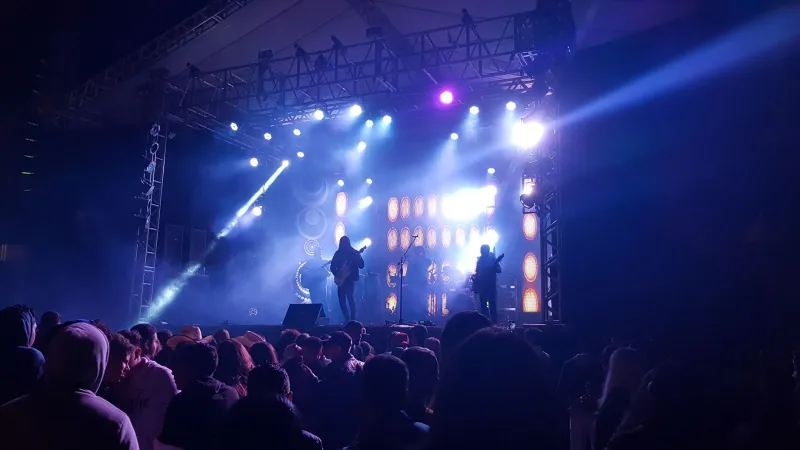
On a Saturday evening in Wolverhampton, a man in a white jumpsuit is performing 'Suspicious Minds' to an audience of approximately eight hundred people. His accent is Midlands. His hips move with studied conviction. The crowd, which has paid between twenty-five and forty-five pounds for the privilege, sings every word back at him with an enthusiasm that a sociologist might find instructive and a cultural theorist might find vertiginous.
Elvis Presley died in 1977. The man in the jumpsuit was born in 1981. Nobody in the room is confused about this. And yet something is happening here that deserves considerably more analytical attention than it typically receives.
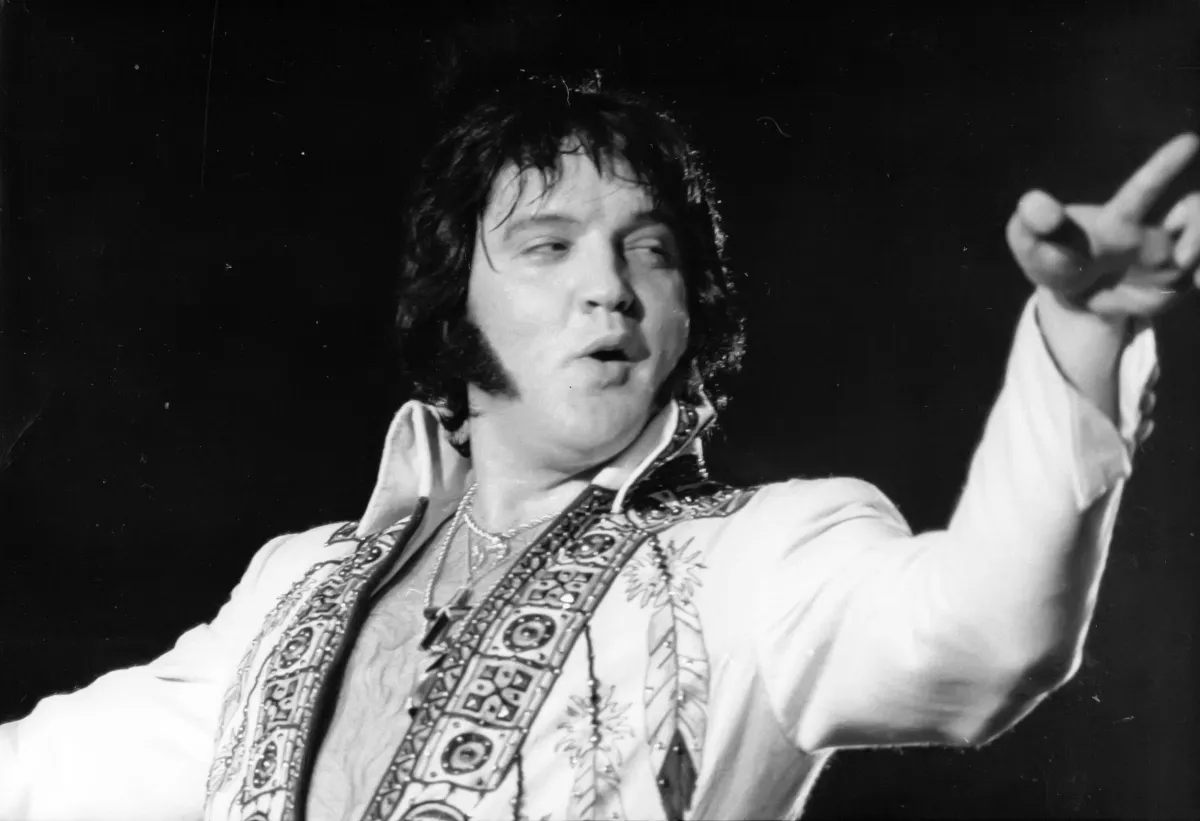 Photo: Elvis Presley, via www.mensjournal.com
Britain sustains one of the world's most prolific tribute act industries — an economy of imitation so extensive that it has its own awards ceremonies, its own trade publications, its own hierarchy of prestige and earning potential. Abba, Queen, Fleetwood Mac, The Beatles, Amy Winehouse, David Bowie: every major figure in popular music has spawned multiple tribute acts, some of which tour internationally, command substantial fees, and cultivate followings that rival those of working original artists.
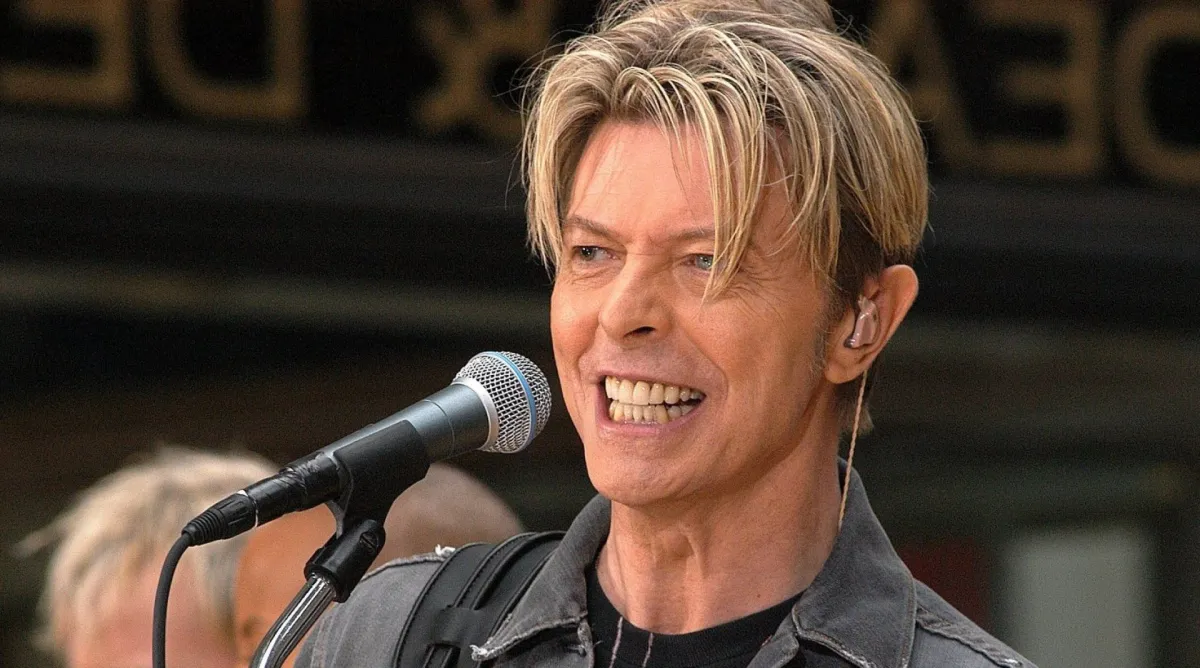 Photo: David Bowie, via singersroom.com
The question worth asking — and that British cultural commentary has been surprisingly reluctant to press — is what this industry means.
The Architecture of Imitation
Tribute acts operate within a paradox that is, on examination, philosophically rich. Their entire value proposition rests on the audience's knowledge that what they are watching is not real. Unlike a forgery, which depends on successful deception, the tribute act requires the audience to hold two contradictory experiences simultaneously: the pleasure of the familiar, and the awareness that the familiarity is constructed.
This is closer to theatre than to concert, and the best tribute performers understand this implicitly. They are not impersonators in the traditional sense — they are not attempting to fool anyone — but nor are they simply cover bands. They occupy a middle territory that involves costume, choreography, biographical performance, and a kind of licensed nostalgia that the audience actively seeks out.
The theatrical parallel is instructive. When an actor plays Hamlet, we do not consider this a failure of authenticity; we understand it as interpretation, as transmission, as the living continuation of a text. When a tribute act performs 'Bohemian Rhapsody', something similar might be argued — and the argument becomes more compelling when the original artist is deceased, or when the original band has dissolved into legal disputes and solo careers that have long since abandoned the music that made them significant.
Democratisation or Retreat?
The most sympathetic reading of Britain's tribute industry frames it as a form of cultural access. Tickets to a Rolling Stones tour — on the increasingly rare occasions that such a thing is available — begin at prices that exclude vast portions of the population. The tribute act brings an approximation of that experience within reach of audiences who would otherwise be entirely shut out.
This argument has genuine force. The geography of live music in Britain is profoundly unequal. The major touring circuit concentrates on a handful of metropolitan venues; the regional infrastructure that once sustained grassroots live performance has been decimated by austerity, rising rents, and the collapse of the pub and club circuit. Into this gap, tribute acts have moved with considerable effectiveness — they will play the Rhyl Pavilion, the Bridlington Spa, the Buxton Opera House. They go where original artists will not.
But the democratisation argument has limits. What is being democratised, precisely? Access to a performance of music that was made decades ago, by artists who are either dead or inaccessible, performed by people whose primary skill is resemblance. If the live music economy were functioning equitably, would these audiences be choosing tribute acts — or would they be discovering new artists, taking risks, encountering the genuinely unfamiliar?
The tribute industry, from this angle, looks less like democratisation and more like a symptom: evidence of a cultural economy so distorted by the economics of superstardom that the space for mid-level original artists has effectively collapsed, leaving audiences with a binary choice between the unaffordable original and the affordable copy.
Grief, Memory, and the Body That Isn't There
There is another dimension to the tribute industry that purely economic analysis cannot capture: its relationship with grief. Many of the most successful tribute acts are built around artists who are dead — and the audiences who attend these performances are, at least in part, seeking something that no economic analysis adequately describes.
To watch a Bowie tribute act in the years since his death in 2016 is to participate in a collective act of mourning that has no other available form. There will be no more Bowie tours. The body that produced 'Heroes' and 'Life on Mars' no longer exists. The tribute act offers, in its place, a body that performs Bowie — that wears the Ziggy Stardust lightning bolt and moves through the choreography of a concert that many audience members attended in life.
This is neither fraud nor delusion. It is a cultural ritual for which Britain, with its characteristic reluctance to discuss death directly, has developed an elaborate and commercially successful infrastructure. The tribute act is, among other things, a séance — and the audience knows it.
The Authenticity Trap
Critiques of the tribute industry tend to circle back to authenticity — the sense that something essential is missing, that the experience is somehow lesser for being reproduced. But this critique is worth examining carefully, because authenticity in popular music is a considerably more constructed category than it appears.
The 'original' artists whom tribute acts imitate were themselves products of management decisions, image consultants, record company strategies, and carefully maintained personas. The authentic Freddie Mercury was also a performance. The question of what is being lost in the tribute version is therefore more complex than it first appears.
What is genuinely absent, perhaps, is risk — the possibility that the artist might do something unexpected, might be having a bad night, might be in the middle of an artistic evolution that the audience finds uncomfortable. The tribute act, by definition, cannot surprise you in the ways that matter. It can only confirm what you already know.
Whether Britain's audiences want to be surprised is, perhaps, the more uncomfortable question — and one that the cheerful, well-attended, financially robust tribute industry answers, every weekend, in venues across the country.
What the Copy Reveals About the Original
There is a way of reading the tribute industry not as a failure of cultural ambition but as an involuntary critical apparatus. What survives in tribute form — what audiences will pay to experience in approximation — tells us something about which artists and which moments have genuinely embedded themselves in collective life.
Not everything becomes a tribute act. The industry is ruthlessly selective, and its selections are revealing. Abba endures; many of their contemporaries do not. Queen fills arenas in tribute form; bands of equivalent commercial success from the same era have been largely forgotten. The tribute industry, in this sense, is a folk canon — a bottom-up determination of what a culture considers worth preserving.
That it preserves through imitation rather than through archives or academic study is very British. We have always trusted the living performance over the document.