Luminous Testimony: How Britain's Stained Glass Became a Battlefield of Light
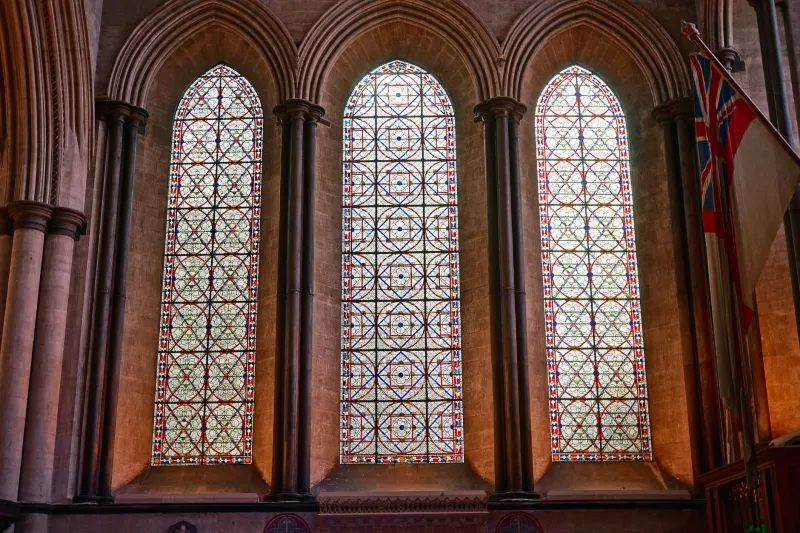
Luminous Testimony: How Britain's Stained Glass Became a Battlefield of Light
There is something quietly authoritarian about stained glass. It controls the light you receive. It tells you what to look at, what to venerate, whose face deserves to be rendered in cobalt and gold. Walk into almost any Victorian church in a former mill town — Saltaire, Accrington, Macclesfield — and the windows will tell you, without apology, exactly who mattered. Industrialists kneel beside saints. Benefactors' names are etched in the borders like credits on a film they commissioned, cast, and directed entirely themselves.
For centuries, this has been accepted as simply the way things are. Sacred architecture requires patronage; patronage requires acknowledgement. But a growing number of artists, historians, and community groups across Britain are beginning to ask a different question: not merely who is in the glass, but who was kept out of it — and what it means to answer back in the same medium.
The Ledger of Light
The Victorian era produced stained glass on an industrial scale, a fitting irony given that much of it was funded by the very industries transforming British life. The Pre-Raphaelite influence, channelled through studios like Morris & Co., gave this period its distinctive aesthetic: elongated figures, jewel-saturated palettes, an almost aggressive beauty. But beauty, as ever, was selective.
Dr Sarah Featherstone, a cultural historian at the University of Leeds who has spent a decade cataloguing the iconographic programmes of northern English churches, describes the windows as "donor portraiture dressed in theological clothing." The biblical narratives were real enough, but the faces, the emphases, the choice of which parables to illustrate — these were negotiations between clergy and money. Workers who built the mills that funded the windows appear nowhere within them. Women, where present, are almost exclusively maternal or martyred. Communities of colour, present in British port cities throughout the nineteenth century, are entirely absent.
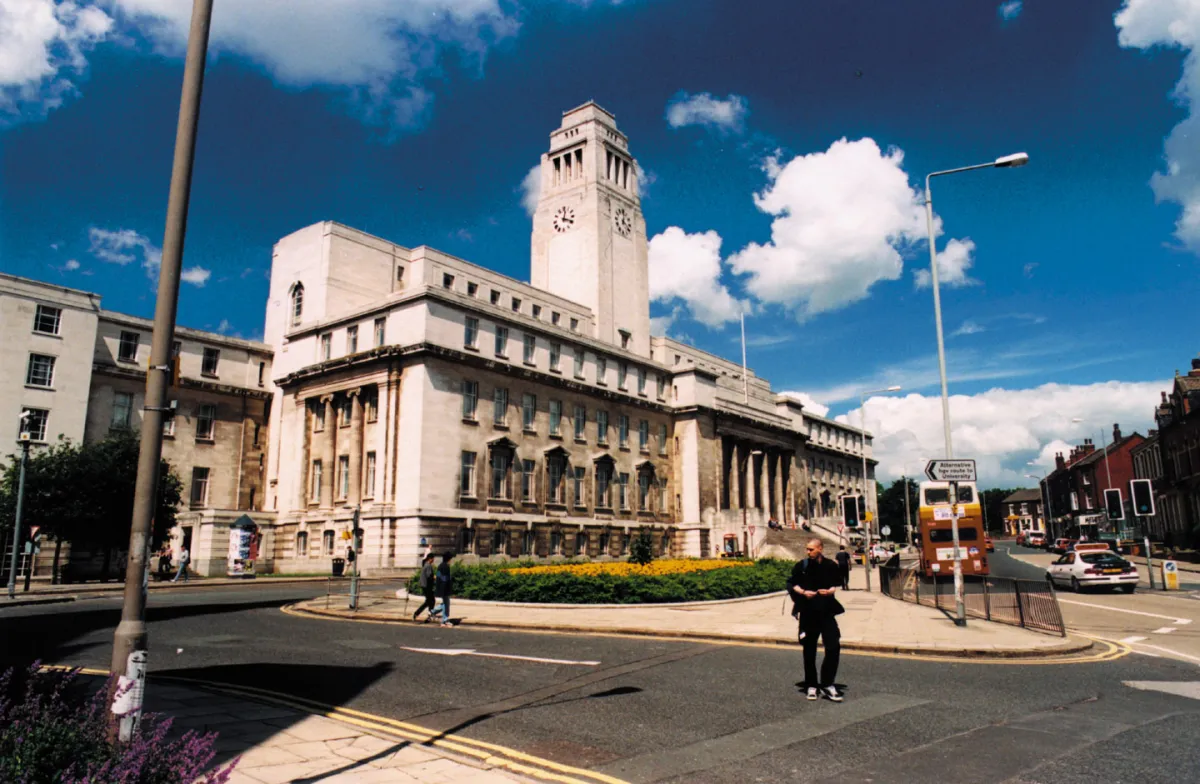 Photo: University of Leeds, via 4.bp.blogspot.com
"These windows functioned as aspirational self-portraits for the merchant class," Featherstone explains. "They were buying permanence. They were buying the right to be remembered as pious, as civic-minded, as worthy. The glass was a form of moral laundering."
Postwar Additions and Their Discontents
The story does not end with the Victorians. The postwar period produced its own wave of civic glazing, as bombed churches were rebuilt and new crematoriums, council chambers, and university chapels were commissioned across the country. Artists such as John Piper and Patrick Reyntiens brought a modernist vocabulary to the medium — abstract, expressionist, formally daring — and for a moment it seemed as though stained glass might shed its hierarchical associations.
Yet even these windows carry their own ideological freight. Many postwar memorial windows encode a particular vision of national sacrifice: overwhelmingly white, overwhelmingly male, freighted with a martial dignity that tells only one version of what the war cost and who bore its weight. The Windrush generation was already arriving on British shores when some of these windows were being installed. Their contribution to the rebuilding of Britain — literal and figurative — is absent from the glass.
This is not merely an aesthetic oversight. It is a form of erasure that compounds across generations, shaping what communities understand about themselves when they enter spaces meant to hold collective memory.
Windows That Answer Back
The most compelling development in contemporary British stained glass is not stylistic but argumentative. A quiet movement has emerged to commission new windows that enter into explicit dialogue with existing ones — works designed not to complement their predecessors but to challenge them.
At a parish church in Bristol, a 2021 commission by artist Yemi Awosile placed figures from the city's African and Caribbean communities directly alongside the Victorian benefactors whose wealth derived from transatlantic trade. The tonal contrast was deliberate: Awosile used a warmer, more saturated palette for the new figures, ensuring they did not simply blend into the existing visual language but asserted themselves within it. Congregation members described the experience of sitting beneath both sets of windows simultaneously as "uncomfortable in exactly the right way."
Similarly, a project at a former colliery welfare hall in South Wales — now repurposed as a community arts centre — invited local women to collaborate with glazier Rhian Thomas on a window commemorating female miners and the women who sustained pit communities through strikes and disasters. The resulting work sits directly opposite a Victorian window depicting male labour in heroic terms. The juxtaposition is not accidental. It is the entire point.
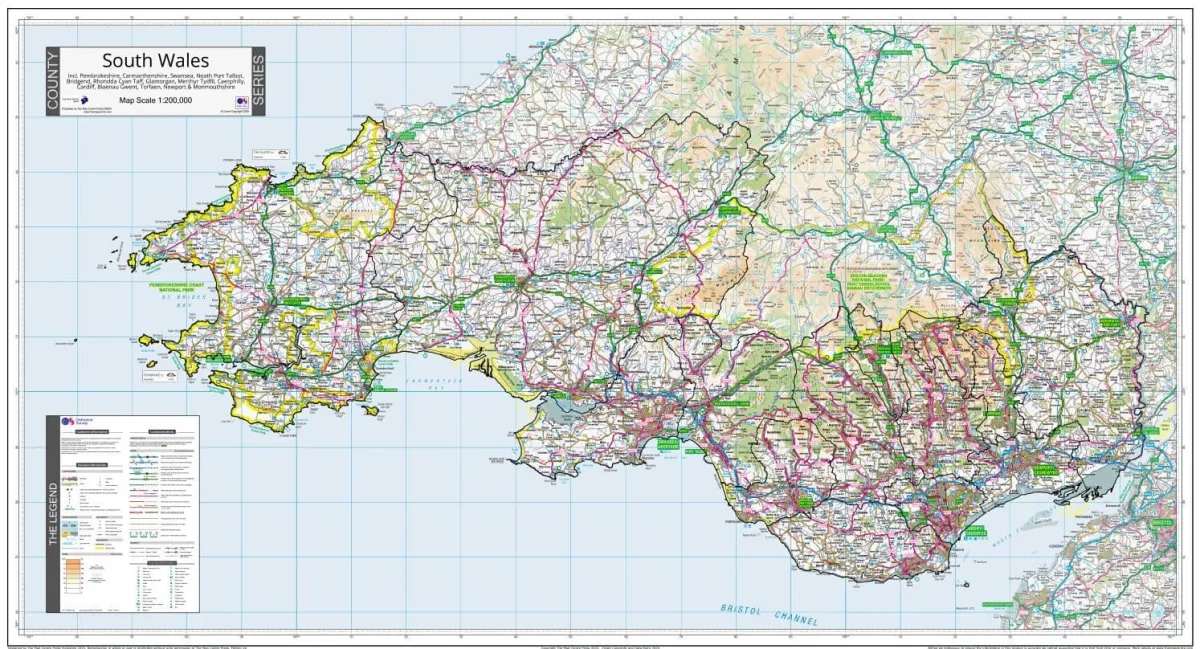 Photo: South Wales, via files.ekmcdn.com
"Stained glass has always been about what a community chooses to make permanent," Thomas has said. "We're not vandalising the past. We're completing the sentence."
The Politics of Permanence
What makes this movement particularly resonant is the medium itself. Stained glass does not feel like protest. It feels like institution. It carries the weight of centuries, the gravitas of sacred space, the apparent permanence of fired mineral pigment fused into silica. When new windows make radical arguments, they do so in the language of authority — and that, precisely, is their power.
Historian and curator Marcus Aldridge, who has written extensively on British civic art, argues that this reclamation of the medium is one of the most politically astute gestures in contemporary visual culture. "Putting a marginalised history into stained glass is not the same as putting it in a gallery," he observes. "A gallery can be curated around you, funding can be withdrawn, exhibitions close. But a window is structural. It is part of the building. It is very difficult to un-commission."
There is resistance, of course. Some heritage bodies have been cautious about approvals, citing concerns about architectural integrity. Certain congregations have found the process of consultation — genuinely including communities previously excluded from the iconographic record — uncomfortable and slow. The Church of England's own guidelines on new commissions remain, by some accounts, more focused on aesthetic continuity than on representational justice.
But the conversations are happening, and they are happening in light. Britain's stained glass tradition, long assumed to be a settled archive of the powerful, is discovering that the medium has always been capable of revision — that light, unlike stone, can be redirected.
Reading the Glass Differently
For visitors willing to look with fresh eyes, existing windows already contain more contradiction than they first appear to offer. The halos that surround donor portraits sit uneasily beside the theological narratives they frame. The labourers who appear as background figures in scenes of industrial charity are rendered with a specificity — calloused hands, worn faces — that suggests the glaziers saw them more clearly than the patrons who paid for the work.
This is the crossed line at the heart of the tradition: the tension between what the patron commissioned and what the artist made. Between the story power wanted told and the story that crept into the margins.
The new generation of stained glass artists is not merely adding to that tradition. They are insisting that the margins were always part of the text.