Small Pages, Large Stakes: The Battle to Redraw Britain's Children's Illustrated World
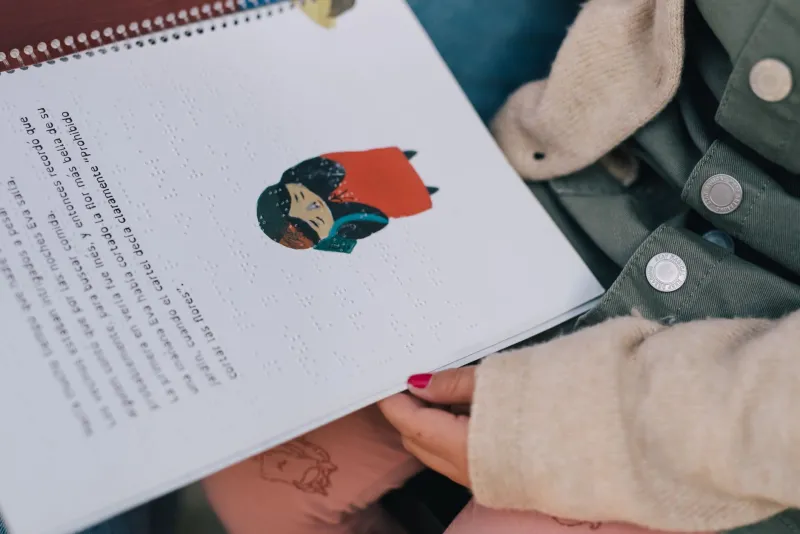
Small Pages, Large Stakes: The Battle to Redraw Britain's Children's Illustrated World
Pick up a picture book published in Britain before 1990 and the visual grammar is, in most cases, immediately legible: a world that is predominantly white, largely middle-class in its domestic architecture, and illustrated in a tradition that owes its aesthetic lineage to a particular strain of English pastoral — Beatrix Potter by way of E.H. Shepard, warmly rendered, gently reassuring, and profoundly exclusive in ways that generations of children from outside its frame were simply expected to overlook.
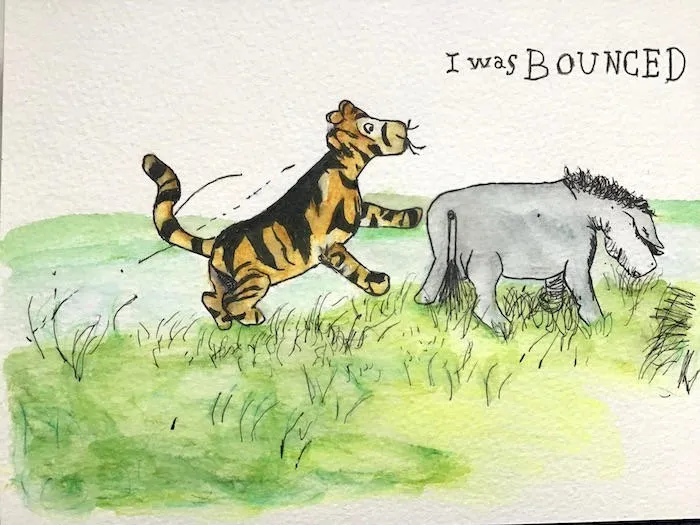 Photo: E.H. Shepard, via images-wixmp-ed30a86b8c4ca887773594c2.wixmp.com
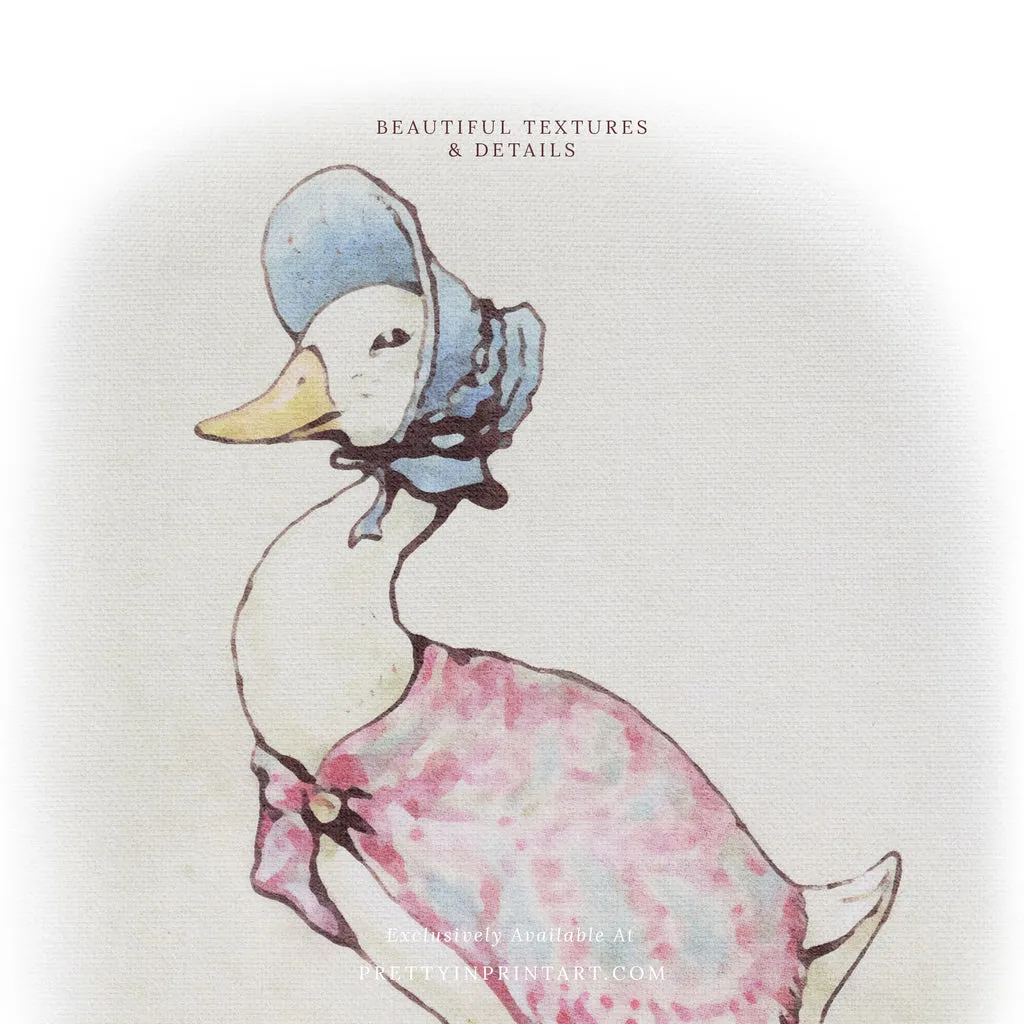 Photo: Beatrix Potter, via www.prettyinprintart.com
The picture book, it is worth stating plainly, is not a neutral object. It is the first visual language many children encounter — the first sustained sequence of images that tells them something about how the world looks and, by implication, who belongs in it. The stakes of its illustration, therefore, are considerably higher than its modest dimensions might suggest.
Britain's children's publishing industry has, over the past decade, moved with genuine if uneven purpose towards expanding the visual representation it offers young readers. That movement has not gone uncontested.
The First Image
Research into early childhood development has long established that visual representation carries formative weight. Children who see themselves reflected in the books they are given receive a message about their belonging in the world of story, of imagination, of cultural value. Children who do not receive a different message — one that need never be stated explicitly to be thoroughly absorbed.
Illustrators working in the children's sector are acutely aware of this. Several practitioners interviewed for this piece described the particular responsibility they feel in constructing the visual world of a picture book — the decisions embedded in every face, every domestic interior, every depiction of family structure. 'Every choice is an argument,' one illustrator, based in Bristol, explained. 'Even the choice to draw a family around a table is a choice about which table, which family, which version of ordinary life you're presenting as the default.'
For decades, that default was narrow. The expansion of that default — through the work of illustrators, editors, and publishers committed to a more genuinely plural visual language — is the project currently underway. It is also the project currently under fire.
The Diversity Debate and Its Discontents
The push for greater representation in children's illustration has attracted the full spectrum of cultural-political responses that now accompany any serious discussion of inclusion in the British arts. At one end, a genuine and growing commitment from publishers, librarians, and educators who have seen the evidence of what exclusion costs young readers. At the other, a vocal contingent — active in certain corners of the press and on social media — that frames the expansion of visual representation as ideological imposition, the replacement of craft with quota.
This framing is, on examination, difficult to sustain. The argument that picture books depicting children of colour, same-sex parents, or disabled protagonists represent a departure from some neutral artistic tradition requires one to accept that the tradition they are departing from was itself neutral — which it manifestly was not. The pastoral English idyll of mid-century children's illustration was no less ideological for being comfortable to those it centred.
Nevertheless, the debate has real consequences for working illustrators, particularly those from backgrounds underrepresented in the industry's history. Several described navigating a market in which their work is simultaneously in demand — as publishers seek to diversify their lists — and subject to a specific kind of scrutiny that white illustrators working in conventional registers do not face. 'There's this pressure to be representative and authentic and groundbreaking, all at once,' one illustrator of South Asian heritage explained. 'And if the book doesn't perform commercially, that gets read as evidence that the market doesn't want this, rather than as the ordinary risk of publishing.'
The Authenticity Question
Running through the debate about representation is a more philosophically complex question about authenticity: should illustrators draw primarily from communities they belong to, or does such a prescription risk a kind of creative segregation that ultimately serves no one?
This is not a question with a clean answer. The children's publishing world has seen high-profile controversies in recent years in which books depicting specific cultural experiences have been illustrated by practitioners with no connection to those communities — sometimes with results that, however well-intentioned, reproduced precisely the kind of visual flattening they sought to move beyond. These cases have intensified calls for what some practitioners term 'own voices' illustration: the principle that lived experience carries a visual intelligence that research and empathy, however conscientious, cannot fully replicate.
Critics of this position — including some illustrators of colour who resist the prescription — argue that it risks reducing identity to credential, and that the question of whether an illustration is good, accurate, and respectful is ultimately separable from the question of who made it. The debate within the illustration community itself is nuanced in ways that the broader cultural-political argument rarely acknowledges.
What is less contested is the structural point: an industry that has historically offered its commissions, its publishing contracts, and its prize nominations to a narrow demographic cannot address the consequences of that narrowness simply by asking the same demographic to draw more carefully. The pipeline matters. The art schools matter. The agents and editors who decide which portfolios get serious attention matter.
What the Nursery Shelf Teaches
Educators have been among the most consistent advocates for representational change in children's illustration, and their perspective carries a particular clarity. Primary school teachers working in diverse urban settings describe the visible impact on children of encountering — or failing to encounter — themselves in the books available to them.
'I have children in my class who have never seen a picture book where anyone looks like them,' one teacher in a Birmingham primary school told Crossed Lines. 'And I have children who have never encountered a book where anyone looks significantly different from them. Both of those are failures. They're producing different kinds of limitation, but they're both failures.'
The nursery shelf is, in this sense, one of the most consequential curatorial decisions in a child's early life. The books that populate it — in schools, in libraries, in the home — compose a visual argument about whose stories are worth telling, whose faces belong in the frame, whose ordinary life is ordinary enough to be illustrated.
Britain's children's illustration community is currently in the midst of a genuine, if incomplete, reckoning with the legacy of that argument. The illustrators pushing at its boundaries are doing work that is simultaneously artistic and political — not because they have chosen to make it political, but because the images we hand to children have always been political, whether we acknowledge it or not.
The lines being drawn on these small pages are not small. They are among the most consequential marks being made in British visual culture today.