Sealed Futures: The Strange Cultural Life of Britain's Forgotten Time Capsules
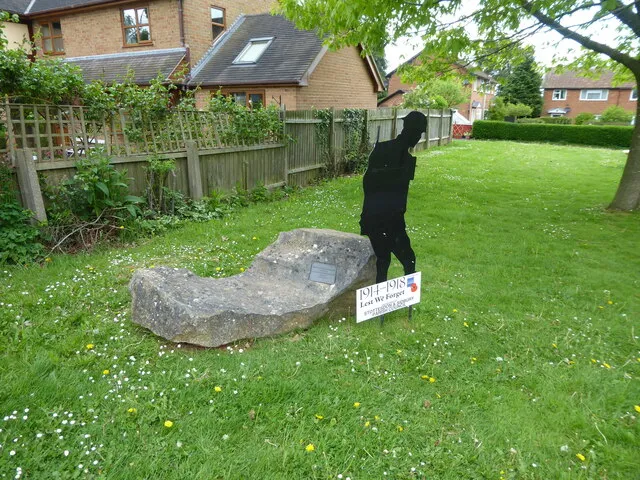
Photo: Jeremy Bolwell , CC BY-SA 2.0, via Wikimedia Commons
Sealed Futures: The Strange Cultural Life of Britain's Forgotten Time Capsules
Somewhere beneath the playing fields of a secondary school in Coventry, sealed inside a stainless steel canister and surrounded by a modest collection of local newspapers, a commemorative coin, and a letter from the then-headmistress, lies a time capsule buried in 1995. The school has since been rebuilt. The headmistress has retired and passed away. Nobody is entirely certain where, precisely, the capsule was interred. It may be under the new car park. It may have been disturbed during the building works. It may simply be waiting, perfectly intact, for someone who will never come.
This is not an unusual story. Britain, it turns out, is riddled with sealed futures.
The Archaeology of Optimism
Time capsules occupy a peculiar position in the cultural imagination. They are, on the surface, acts of extraordinary optimism: a community agreeing, however briefly, that what it is and what it values is worth preserving for strangers it will never meet. The gesture implies a faith in continuity — in the existence of a future that will be curious about the present, that will have the means and the inclination to dig.
Yet the majority of Britain's buried capsules have never been opened. Some were forgotten almost immediately after interment. Others were placed with specific opening dates — 2000, 2025, 2050 — that have either passed without ceremony or are approaching without anyone having located the original deposit. Local archives hold fragmentary records: a photograph of a mayor holding a tin box, a brief paragraph in a parish newsletter, a planning document noting that something was placed beneath a foundation stone before the concrete was poured.
Dr Janet Coldwell, an archivist at the West Yorkshire History Centre who has spent several years attempting to catalogue capsules buried across the region, describes the work as "archaeology without the digging." The challenge is not physical but documentary: tracing the institutional memory of communities through the gaps and silences in their own records. "People buried these things and assumed the act of burial would itself be remembered," she explains. "They didn't account for institutional change, for buildings being demolished, for the people who knew simply dying."
 Photo: West Yorkshire History Centre, via c8.alamy.com
What We Choose to Preserve
The contents of time capsules that have been opened — and a small number are discovered accidentally each year, during building works, renovations, or landscape projects — constitute a remarkably consistent portrait of collective self-image. Newspapers dominate, because newspapers feel like official record. Coins and stamps are almost universal, as though communities understand themselves primarily through the iconography of currency. Letters to the future are common, usually written in a tone of cautious optimism laced with mild anxiety about the pace of change.
What is absent is at least as revealing. The capsules buried in Britain's postwar civic buildings almost never contain anything that would complicate the narrative of reconstruction and renewal: no acknowledgement of the racial tensions simmering in Notting Hill, no record of the communities displaced by slum clearance, no voices from the margins of the official story. The capsule, like the stained glass window, tends to reflect the priorities of whoever had the authority to seal it.
 Photo: Notting Hill, via i.ebayimg.com
This is not merely historical. Contemporary capsule projects — school millennium boxes, jubilee deposits, community foundation-stone ceremonies — reproduce the same selective instinct. The items chosen are almost invariably those that present the community at its most coherent and aspirational. Conflict, inequality, dissent: these are not the things we tend to bury for posterity.
Artists Working in Temporal Delay
The most intellectually interesting engagement with the time capsule tradition in contemporary British culture comes not from heritage bodies but from artists who have recognised its creative and political possibilities.
London-based artist collective Slow Archive has spent the past three years working with communities across England to create what they call "honest capsules" — deposits that deliberately include the uncomfortable alongside the celebratory. Their project in Burnley, completed in 2022, buried a sealed container containing not just local newspapers and commemorative items but testimonies from residents about housing insecurity, a record of a planning dispute over a proposed development, and a hand-drawn map of businesses that had closed in the preceding decade. The capsule is scheduled to be opened in 2072, by which point, the collective notes, the city will look entirely different again.
"The traditional time capsule is an act of propaganda," says collective member Rosa Yates. "It's a community deciding what it wants to be remembered as. We're interested in what communities actually are — which is messier, more contested, and ultimately more interesting."
A different approach has been taken by Scottish artist and writer Callum Dreich, whose ongoing project Interment involves creating fictional time capsule contents — objects, letters, and ephemera belonging to invented communities — and burying them in actual locations across the country, without marking the sites. The project inverts the usual logic: rather than preserving the real for the future, Dreich is seeding the future with fabrication. "Every archive contains invention," he has written. "I'm just being honest about it."
The Capsule as Political Gesture
To bury something for the future is to make an argument about what the future should value. This is, when examined carefully, a profound act of cultural presumption — and one that becomes more complex the more we interrogate who gets to make it.
The millennium capsule projects of the late 1990s were, in retrospect, revealing in their anxieties. Many of them were preoccupied with technology: CDs, floppy discs, printed screenshots of early websites were deposited with a kind of reverent uncertainty, as though communities sensed that the digital was transforming everything but could not yet articulate how. The physical objects chosen to represent the analogue world — books, handwritten letters, printed photographs — were already being positioned as endangered species worth preserving.
There is something melancholy in this, and something instructive. The communities burying those capsules were not, primarily, archiving the present. They were performing their relationship to change: acknowledging that the world was shifting beneath their feet, and choosing, in response, to seal something away from the flux.
This is, perhaps, the deepest function of the time capsule. Not documentation but consolation. Not communication with the future but a form of mourning for the present — an acknowledgement that what exists now will not always exist, and that this loss is worth marking, even if the marker is invisible to everyone but the person who placed it.
The Unopened as Medium
There is a case to be made that the most culturally significant time capsule is not the one that is eventually opened but the one that remains sealed. The unopened capsule is a pure act of faith: it asks nothing of the future except that it exist. It makes no demands, offers no explanation, permits no revision. It simply waits.
Britain's hundreds of forgotten capsules — sitting beneath car parks, embedded in civic walls, buried in gardens of buildings long since demolished — constitute, in aggregate, a distributed archive of national aspiration that has never been read. They are letters that found no recipient, gifts that found no occasion.
That they remain sealed is not, perhaps, a failure. It may be the point. In a culture that has grown accustomed to instant retrieval, to the idea that everything worth knowing can be accessed immediately and indefinitely, there is something quietly radical about an object that simply refuses to be opened — that holds its contents in permanent reserve, waiting for a future curious enough to find it.
The crossed line here is temporal rather than social: a communication sent across time that may never arrive, from a community speaking to a future it could only imagine, about a present it could only partially understand. The capsule does not resolve this gap. It inhabits it.