Objects in Limbo: What Britain's Self-Storage Boom Tells Us About the Lives We Cannot Quite Leave Behind
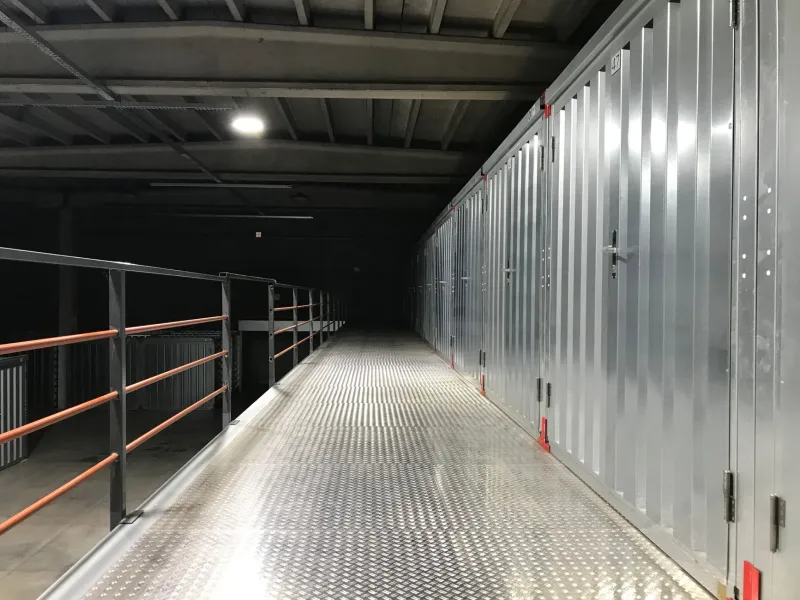
The facility is on a trading estate on the outskirts of Swindon, between a tyre fitter and a cash-and-carry wholesaler. It is not beautiful. The building is a long, low structure of corrugated metal, its exterior painted in the corporate colours of one of the sector's larger chains — orange and white, colours chosen, presumably, for their suggestion of energy and optimism. Inside, the corridors are long and identical, lit by fluorescent strips that activate as you walk and extinguish behind you. The smell is of cool air and cardboard and something harder to name — the faint, neutral odour of things that are waiting.
Britain has approximately 2,000 self-storage facilities, occupying collectively more than 50 million square feet of space. The sector has grown consistently for over two decades, surviving recessions, a pandemic, and the general contraction of consumer spending with remarkable resilience. In fact, the industry tends to expand during periods of social disruption — rising divorce rates, housing instability, demographic transition — which tells you something important about what self-storage actually is. It is not, in the end, a property solution. It is an emotional one.
The Permanent Temporary
Every self-storage customer arrives with the same intention: this is temporary. The unit will be needed for three months, perhaps six — just until the house move completes, just until the estate is settled, just until there is more space in the new flat. The industry's own data suggests that the average rental period is considerably longer. Many customers remain for years. Some, by any practical measure, never leave.
This gap between intention and duration is, in itself, a form of cultural testimony. The self-storage unit is one of the few spaces in contemporary British life that is explicitly designed to accommodate irresolution. It makes no demand that you decide. It simply holds — at a monthly rate, on a rolling contract — the objects that represent a decision you are not yet ready to make.
What sorts of decisions? The range is as wide as human experience. There is the furniture from a marital home, divided after a separation but not yet distributed because to distribute it would be to accept that the marriage is genuinely over. There is the contents of a deceased parent's house — the china, the tools, the accumulated decades of a life — held in storage because to sort through it properly would require an emotional reckoning that grief has not yet permitted. There is the darkroom equipment, the pottery wheel, the set of golf clubs, the collection of vinyl — the material evidence of a former self, or a projected future self, that cannot quite be relinquished.
The Archive of the Almost
To think about self-storage seriously is to think about the relationship between objects and identity — a relationship that contemporary British culture handles with considerable ambivalence. On one hand, the minimalism movement, the decluttering gospel of Marie Kondo, and the general rhetoric of voluntary simplicity all insist that freedom lies in reduction, in the shedding of possessions that no longer 'spark joy'. On the other hand, the self-storage industry's continued growth suggests that a significant portion of the population finds it easier to pay to preserve than to make the irreversible gesture of disposal.
This is not, it should be said, mere sentimentality or consumerist accumulation, though it can be both. It is also something more philosophically interesting: a refusal to accept that the past is entirely past, or that the future is entirely foreclosed. The objects in storage are not simply things. They are, to borrow the language of literary criticism, metonyms — parts standing in for wholes, material fragments of lives that remain, in some important sense, unfinished.
The dining table from a marriage holds within it not merely wood and joinery but the accumulated memory of meals, arguments, celebrations, silences. To dispose of it would be to perform a kind of finality that the self is not yet capable of. The storage unit, by contrast, permits a different temporal logic: not the logic of ending, but the logic of suspension. The table remains. The decision remains open. The story has not yet concluded.
Housing, Instability, and the Geometry of Modern Life
It would be a mistake to analyse self-storage purely through the lens of individual psychology without attending to the structural conditions that produce it. Britain's housing crisis — the chronic shortage of affordable homes, the prevalence of small and poorly designed rental properties, the instability of tenure that leaves people moving frequently and unexpectedly — creates a context in which storage is not a luxury but a practical necessity.
A family downsizing from a three-bedroom house to a two-bedroom flat because the mortgage is no longer manageable has nowhere to put the third bedroom's contents. A young professional in a studio flat in Manchester or Edinburgh or Bristol, paying a disproportionate share of their income in rent, has no room for the furniture that belonged to their grandmother. The self-storage unit is, in these circumstances, less a monument to irresolution than a symptom of a society that has failed to provide its citizens with adequate domestic space.
This structural dimension does not cancel the psychological one. It complicates it. The objects in storage are simultaneously the product of housing policy failure and the repository of private emotional weight — and the two dimensions are, in practice, inseparable. The grandmother's furniture could, technically, be sold or donated. It is not. The reasons it is not are both practical and profound.
What Is Kept, and What That Keeping Means
Self-storage staff — the people who process the contracts, who occasionally help customers navigate the corridors, who are sometimes the only witnesses to the moment when someone first opens a unit they have not visited in eighteen months — speak of their work with a particular quality of discretion. They have seen things. They do not, generally, discuss them.
But what they describe, when they do speak, is consistent with the picture that emerges from the industry's own data and from the broader cultural analysis: the units contain, overwhelmingly, not junk but significance. Books. Photographs. Furniture made by hand or passed down through families. Children's artwork. Musical instruments. The props of lives that were, or might have been, or might yet be.
There is something quietly moving about this. In a culture that often treats emotional life as a private embarrassment to be managed rather than expressed, the self-storage unit functions as a kind of confessional — a space where the things that cannot be spoken are nonetheless kept, held, preserved against the possibility that they will one day be needed again.
Britain is not a nation that finds it easy to sit with irresolution. Its cultural instincts run towards the pragmatic, the decisive, the stiff-upper-lipped management of difficulty. The self-storage industry's growth suggests that, beneath that surface, something more complicated is occurring — that thousands of people are quietly, monthly, paying for the right to remain undecided. To keep the door closed. To let the objects wait.
There is no verdict in that waiting. Only the ongoing, very human refusal to say that something is entirely over.