Empire on the Table: How Antiques Roadshow Became Britain's Accidental Confession
Empire on the Table: How Antiques Roadshow Became Britain's Accidental Confession
There is a particular kind of silence that falls across an Antiques Roadshow table when an expert pauses before speaking. It is not the silence of uncertainty. It is the silence of someone choosing their words with the precision of a surgeon. The camera lingers on the object. The owner leans forward. And somewhere in that suspended moment, a question that the programme was never designed to ask hangs unspoken in the marquee air: how did this come to be here?
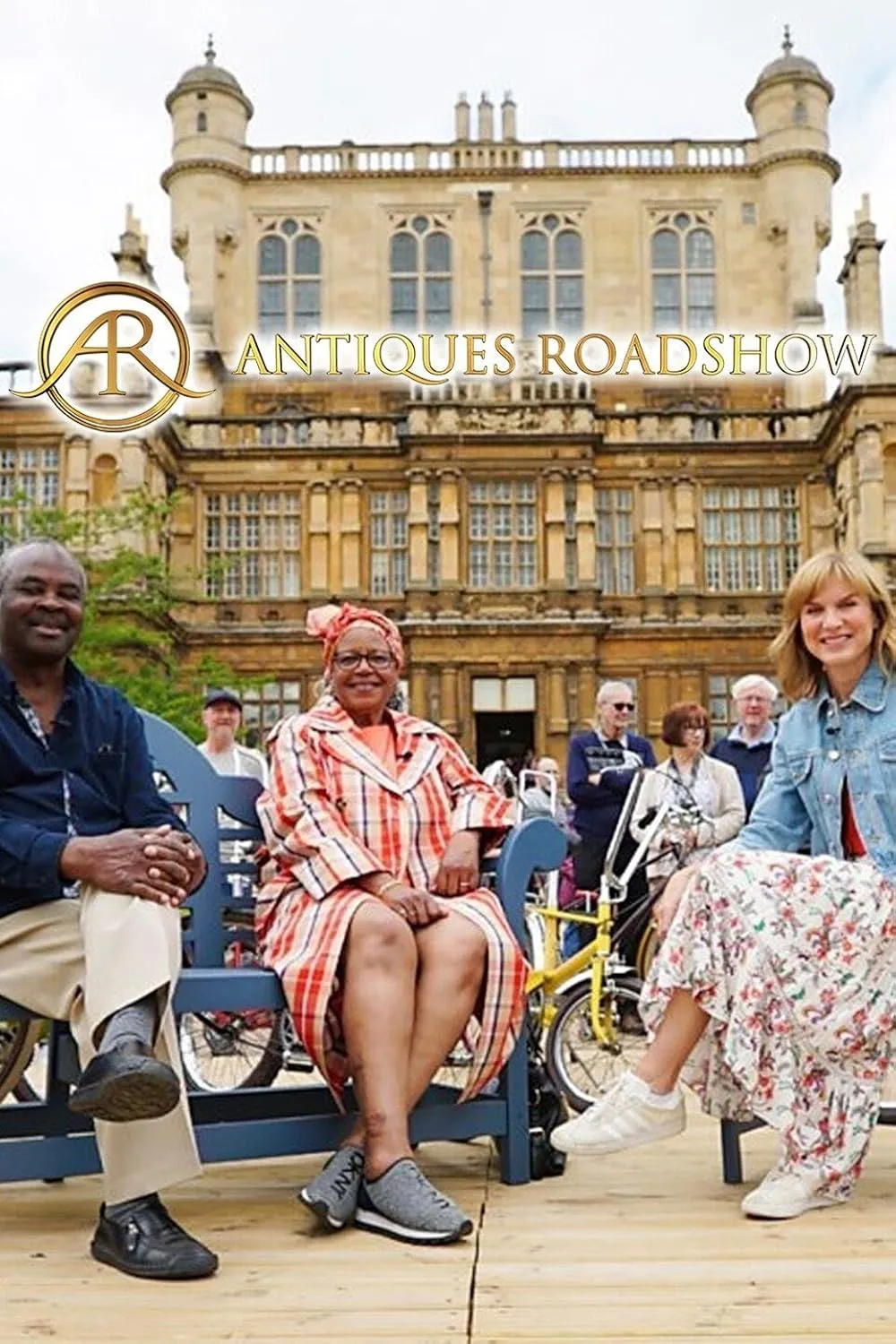 Photo: Antiques Roadshow, via m.media-amazon.com
For forty-seven years, Antiques Roadshow has presented itself as one of the BBC's most reliably innocent pleasures — a travelling pageant of dusty curiosities, family legends, and the occasional gasp at a five-figure valuation. Yet to watch the programme with any critical attention in 2024 is to witness something considerably more complicated: a weekly, largely unrehearsed encounter between Britain's private inheritance and its public conscience.
The Appraisal as Moral Instrument
The show's format is deceptively simple. Members of the public bring objects of potential value to a stately home or civic venue; experts examine, contextualise, and price them; owners react. What this structure inadvertently creates, however, is a confessional architecture. The expert becomes priest, the object becomes evidence, and the valuation becomes — whether or not anyone acknowledges it — a form of reckoning.
Consider the category of objects that arrive from the former British Empire: Benin bronzes purchased at auction in the 1920s, Indian ceremonial weapons collected by colonial administrators, West African textiles acquired under circumstances that no family narrative quite explains. These pieces arrive in the hands of their current owners wrapped in the comfortable mythology of inheritance — grandmother's treasures, grandfather's souvenirs, the accumulated texture of a family's history. The expert's task, nominally, is to establish monetary worth. But provenance questions, once peripheral to the programme's concerns, have crept steadily towards the centre.
This shift has not been accidental. It reflects a broader cultural renegotiation that British institutions have been forced to undertake since at least 2018, when the Sarr-Savoy report on the restitution of African cultural heritage sent tremors through every major collecting institution in the country. Antiques Roadshow, with its democratic, living-room accessibility, has become an unlikely proxy for debates that the British Museum conducts in boardrooms and academic journals.
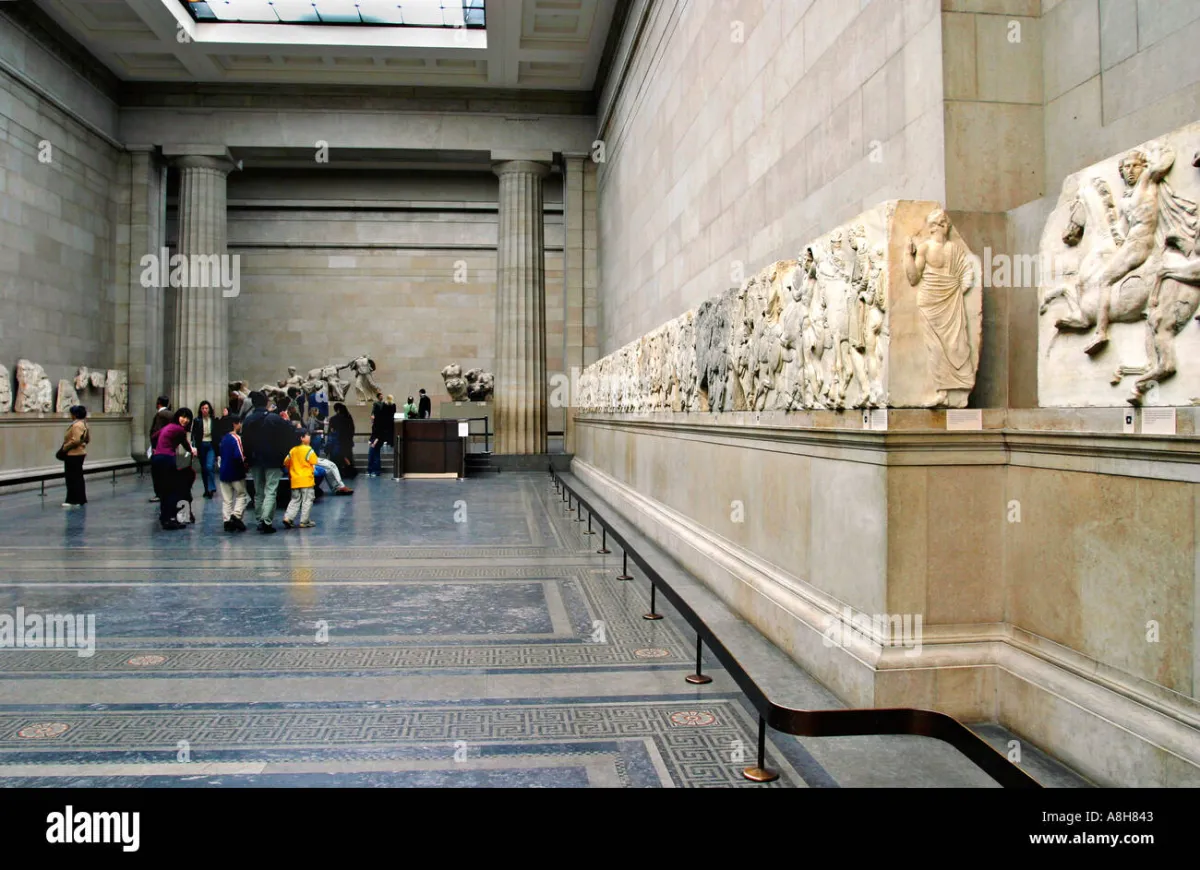 Photo: British Museum, via c8.alamy.com
Provenance and the Problem of Pleasure
What makes the programme genuinely fascinating as a cultural document is the tension it sustains between enjoyment and discomfort. Viewers do not tune in on a Sunday evening seeking a seminar on colonial extraction. They come for the pleasure of discovery, the theatre of expertise, the democratic fantasy that the object gathering dust in your loft might be worth a small fortune. The show flatters its audience's relationship with the past — it suggests that history is something to be cherished, catalogued, and occasionally monetised.
Yet the objects themselves refuse to cooperate with this comfortable framing. A piece of Mughal jewellery that passed through a British regimental officer's hands in 1857 carries a history that no amount of warm narration can entirely domesticate. When experts now routinely include phrases such as 'acquired during the colonial period' or 'the provenance of pieces like this is something collectors are increasingly scrutinising,' they are introducing, however gently, a vocabulary of ethical uncertainty into a programme built on the grammar of pleasure.
The producers have never explicitly positioned Antiques Roadshow as a vehicle for postcolonial critique. Its transformation into one has been gradual, organic, and almost certainly uncomfortable for some of those involved. But that is precisely what makes it so revealing as a barometer of where Britain currently stands.
The Object as Witness
There is a school of thought in material culture studies — associated with scholars such as Arjun Appadurai and, closer to home, with the work of the Victoria and Albert Museum's decolonisation programme — that insists objects have social lives. They accumulate meaning through the hands they pass through, the contexts they inhabit, the stories told about them. An Antiques Roadshow table, viewed through this lens, is not merely a display surface. It is a stage on which objects are called to testify.
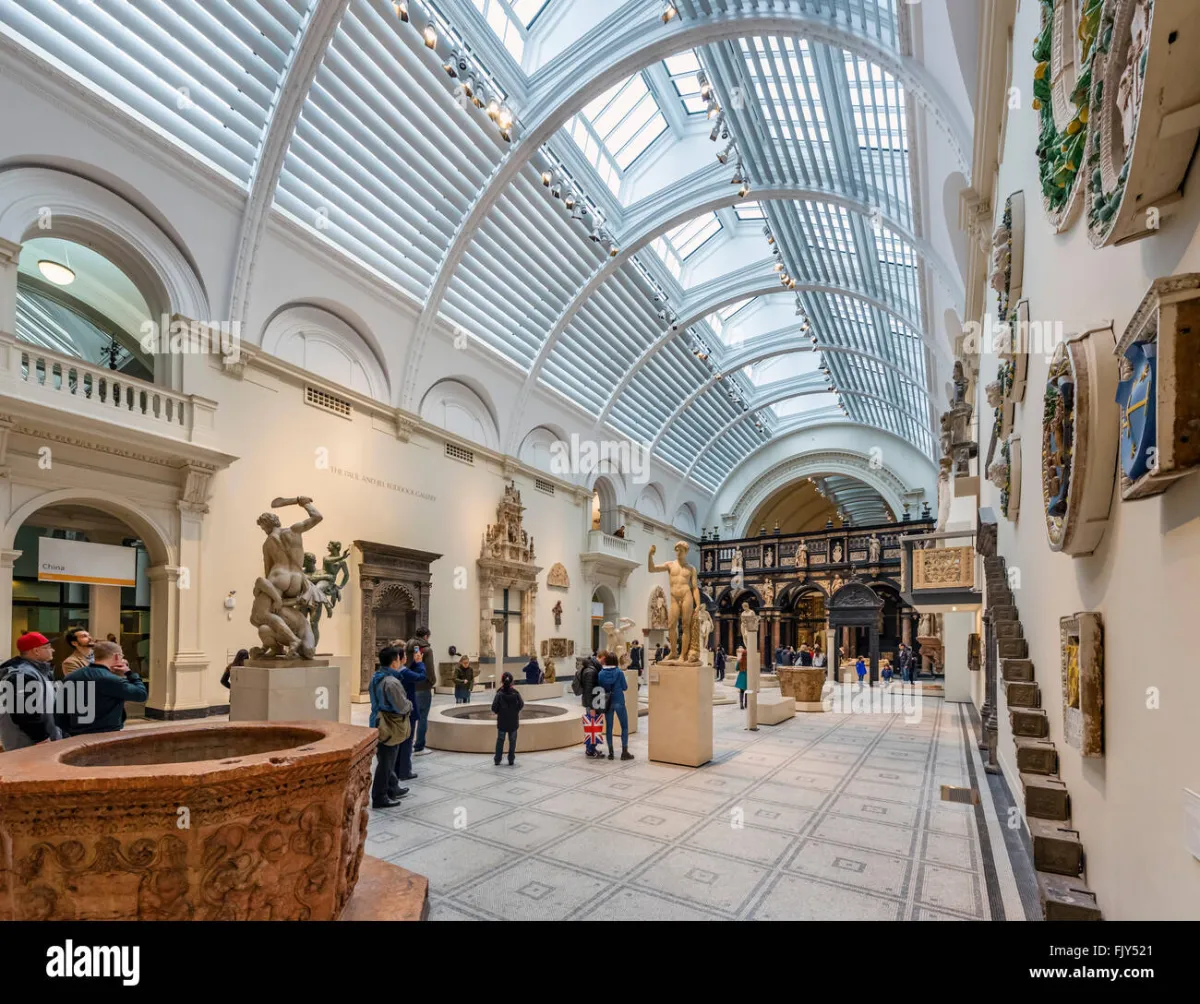 Photo: Victoria and Albert Museum, via c8.alamy.com
The testimony is not always damning. Many pieces that appear on the programme are genuinely what their owners claim: inherited furniture, domestic silver, paintings purchased legitimately by ancestors with modest but honest means. The point is not that every heirloom is tainted. The point is that the programme's format — its insistence on provenance, its expert interrogation of origin — creates the conditions under which the question of legitimacy must be at least silently entertained.
Some owners visibly bristle at this. Others lean into it with a candour that the programme's earlier incarnations would never have accommodated. Increasingly, one watches contributors who arrive not merely seeking a valuation but seeking, in some inarticulate way, a kind of absolution — or at least acknowledgement that the history attached to their inheritance is more complicated than the family story allows.
What the Camera Sees
Visual arts criticism has long attended to the politics of display — who chooses what is shown, in what context, under what lighting, with what accompanying text. Antiques Roadshow is, in this sense, a visual arts programme masquerading as light entertainment. The expert's hands on the object, the close-up of a hallmark or a maker's mark, the slow pan across a surface: these are curatorial gestures, editorial decisions about what deserves attention and what meaning that attention confers.
The programme's recent seasons have shown a growing willingness to let discomfort remain in frame. Moments where experts pause meaningfully, where owners' expressions shift from anticipation to something more ambivalent, are no longer edited away with the brisk efficiency of earlier decades. The camera, it seems, has been instructed to watch more carefully.
This is not a revolution. Antiques Roadshow remains, at its core, a programme about the pleasure of objects and the theatre of expertise. It has not become a documentary about empire, nor should it pretend to be one. But in allowing the crossed lines of personal inheritance and collective history to remain visible — in letting the appraisal carry moral as well as monetary weight — it has become something that its original format never anticipated: a genuinely significant cultural document, hiding, as the best British art so often does, in plain sight.