The Precarious Life of Paint
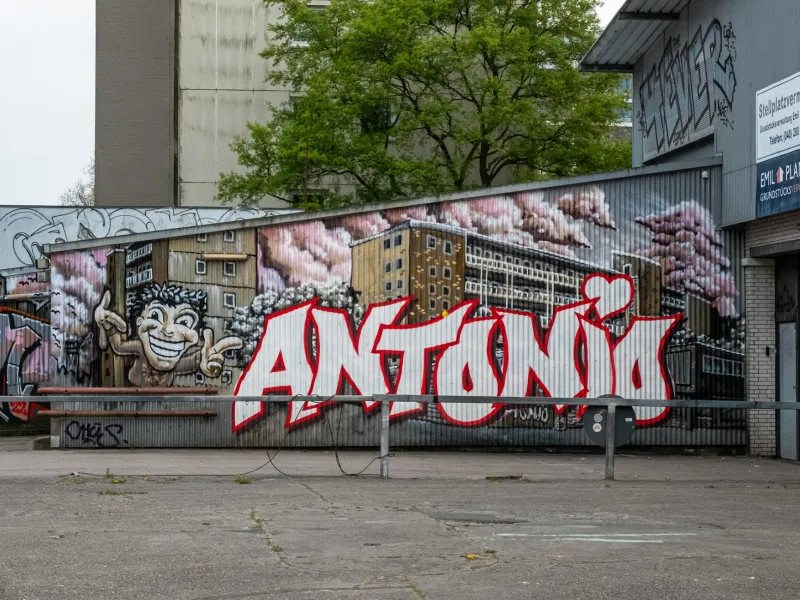
Across Britain's urban landscape, a curious form of cultural archaeology unfolds on walls both celebrated and condemned. Public murals—those ambitious painted declarations of community identity—find themselves caught in an endless cycle of creation, controversy, and occasionally, obliteration. What begins as artistic regeneration can swiftly transform into political liability, revealing the unstable ground upon which public art must stake its claim in contemporary Britain.
The life cycle of a British mural tells a story more complex than its painted surface suggests. Today's symbol of community pride becomes tomorrow's embarrassment; yesterday's controversial statement evolves into protected heritage. This constant state of flux reflects deeper tensions about who gets to speak for communities, what stories deserve permanent telling, and how public space itself becomes a battleground for competing visions of local identity.
The Politics of Permanence
Consider the fate of murals across post-industrial Northern England, where council-commissioned artworks from the 1980s regeneration efforts now present local authorities with uncomfortable dilemmas. Painted during an era of optimistic urban renewal, these works often depicted idealised versions of community life that subsequent decades have revealed as politically naive or culturally problematic. The question facing cash-strapped councils is stark: maintain artworks that no longer reflect local demographics or values, or face accusations of cultural vandalism by painting over decades of artistic labour.
In Manchester's Northern Quarter, a mural celebrating the area's musical heritage has survived three separate attempts at removal, not through any formal protection but through the informal guardianship of local residents who recognise its role in maintaining neighbourhood character against gentrification pressures. Yet two miles away, a similar artwork depicting industrial heritage was quietly painted over after complaints that it romanticised an era of environmental degradation and worker exploitation.
The Bristol Reckoning
The toppling of Edward Colston's statue in Bristol crystallised nationwide debates about public monuments, but the city's mural culture tells a more nuanced story about how communities negotiate their relationship with contested histories. Long before Colston fell, Bristol's walls had become testing grounds for alternative narratives—unauthorised artworks that challenged official versions of local history whilst remaining vulnerable to council enforcement.
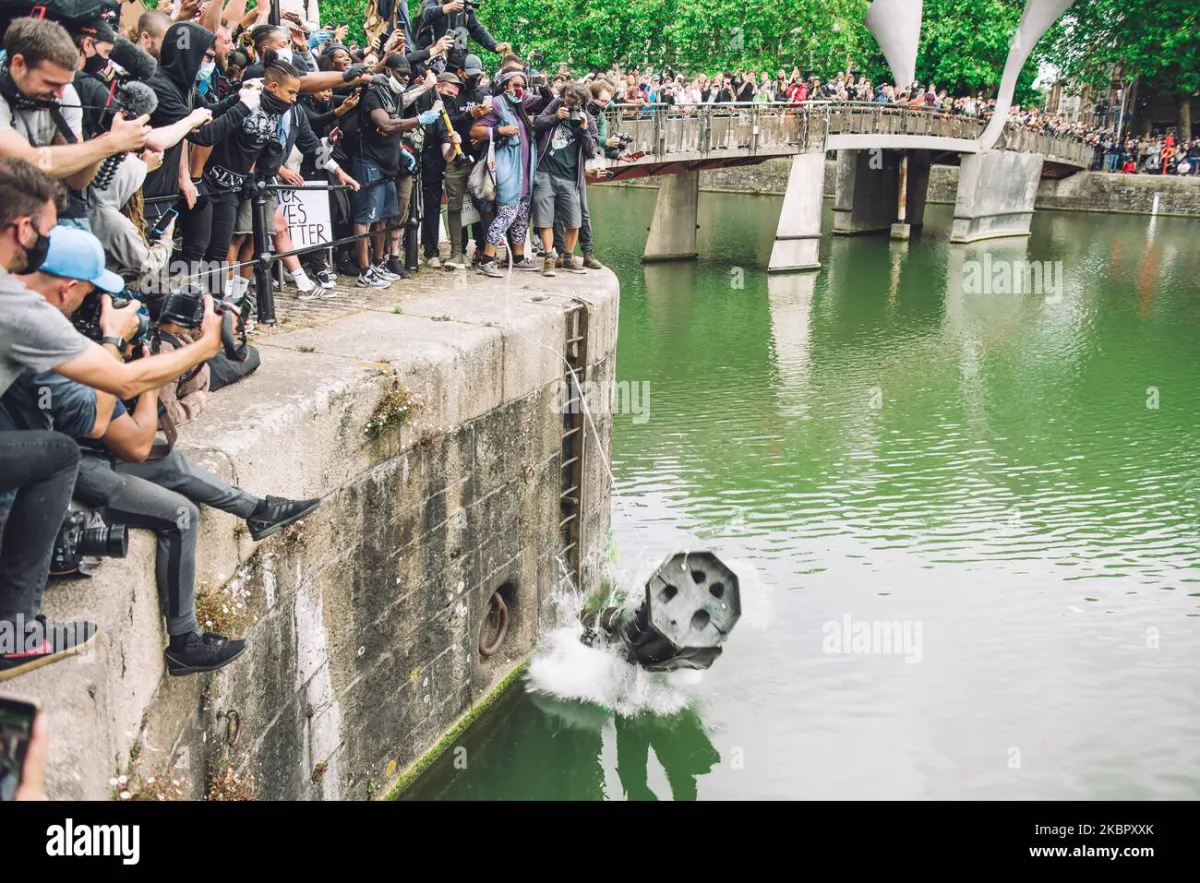 Photo: Edward Colston, via c8.alamy.com
The Banksy phenomenon has complicated this landscape further. The artist's works, initially dismissed as vandalism by local authorities, are now protected by perspex coverings and generate significant tourist revenue. This transformation from criminal damage to cultural asset illustrates the arbitrary nature of artistic legitimacy—and the speed with which public opinion can rehabilitate previously condemned work.
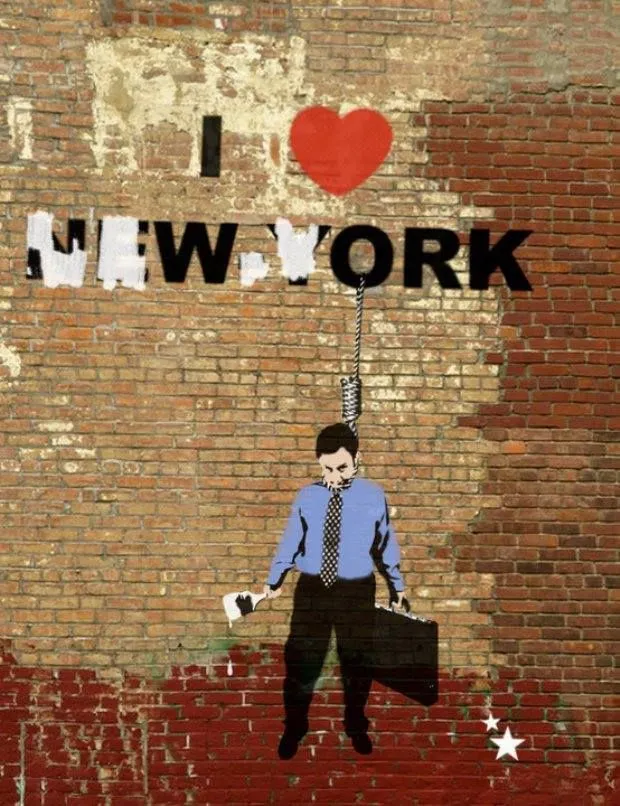 Photo: Banksy, via i.pinimg.com
Gentrification's Painted Face
Perhaps nowhere is the political charge of public murals more evident than in London's rapidly changing neighbourhoods, where street art has become both symptom and accelerant of demographic transformation. In Shoreditch, Brixton, and Hackney, elaborate murals commissioned by property developers serve as cultural window-dressing for residential developments that price out existing communities—the very people whose stories these artworks purport to celebrate.
Local residents have learned to read these painted signals with sophisticated awareness. A mural celebrating 'authentic' local culture often heralds the arrival of coffee shops and boutique retail that existing residents cannot afford. The artwork becomes complicit in its own contradiction—preserving the aesthetic of community whilst facilitating its economic displacement.
The Institutional Response
Museums and galleries have begun to recognise public murals as legitimate cultural heritage, yet this institutional embrace creates new problems. The Tate's documentation of British street art, whilst preserving important cultural history, also contributes to the gentrification process by legitimising formerly marginal spaces as sites of cultural significance worthy of middle-class attention.
Similarly, the Arts Council's funding of community mural projects, though well-intentioned, often imposes external aesthetic and thematic criteria that dilute local specificity in favour of broadly appealing narratives about diversity and community cohesion. The resulting artworks, however technically accomplished, can feel sanitised compared to the raw urgency of unauthorised work.
Digital Documentation and Physical Erasure
Social media has fundamentally altered how public murals exist in cultural consciousness. Instagram and TikTok have created virtual galleries of street art that outlive their physical counterparts, allowing artworks to maintain cultural presence long after their actual destruction. This digital afterlife complicates traditional notions of artistic permanence—a mural may be painted over but continue to circulate online, accumulating meaning and nostalgia divorced from its original context.
Conversely, the viral nature of social media can doom murals to removal. Artworks that might have existed peacefully in local contexts become flashpoints for national controversy when shared online, forcing local authorities to take positions on cultural debates they never intended to enter.
The Unresolved Tension
What emerges from this complex landscape is a fundamental contradiction at the heart of British public art policy. We celebrate murals as expressions of community identity whilst subjecting them to political approval processes that inevitably compromise their authenticity. We commission public art to foster local pride whilst maintaining the authority to remove it when political winds shift.
This tension reflects broader anxieties about how public space functions in an increasingly diverse society. Murals become proxy battles for larger questions about cultural representation, historical memory, and the right to shape neighbourhood identity. Their painted surfaces absorb conflicts that extend far beyond artistic merit into fundamental questions about power, belonging, and the stories we tell ourselves about who we are.
The walls themselves remain silent witnesses to these debates, bearing whatever images current politics will tolerate whilst awaiting the next shift in cultural consensus that may yet again transform celebration into condemnation, or neglect into sudden protective concern.