Underground Frequencies: The Radical Art Britain Hides in Plain Sight
The Architecture of Avoidance
Britain has perfected the art of hiding its most radical cultural expressions in plain sight. Not through censorship or suppression, but through something more subtle and perhaps more effective: institutional displacement. The most subversive ideas don't get banned — they get relegated to the B-side, the appendix, the late-night slot, the limited edition, the footnote that becomes more interesting than the main text.
This pattern repeats across every cultural form with such consistency that it suggests something structural about British cultural production. The album track that never became a single but influenced a generation. The theatrical monologue that overshadowed the main production. The novel's rejected first chapter, published decades later to greater acclaim than the book itself. The BBC radio programme broadcast at 2am that shaped political discourse more than prime-time television.
The Punk Paradigm
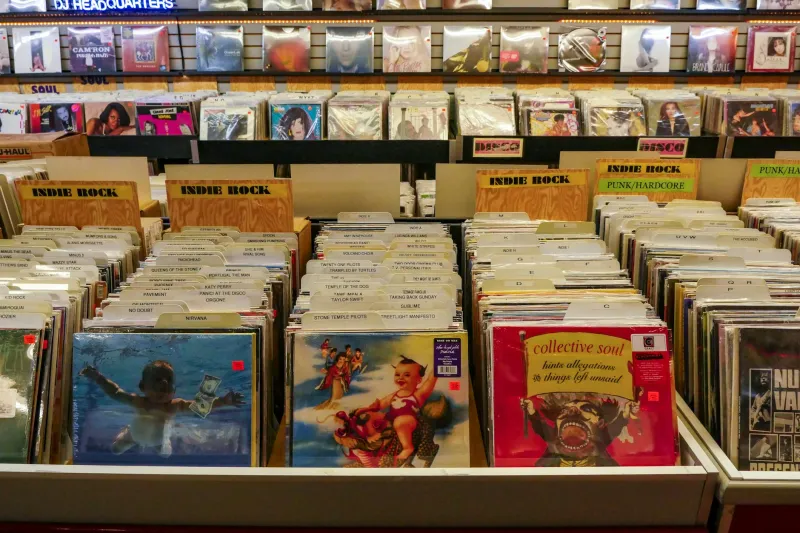
The clearest example remains punk's relationship to mainstream British culture in the late 1970s. While the Sex Pistols grabbed headlines, the most politically radical music was happening in the spaces between — on independent labels, in small venues, on the B-sides of singles that radio wouldn't play.
Crass, arguably Britain's most politically uncompromising band, never appeared on Top of the Pops. Their influence on subsequent generations of activists and artists far exceeded that of more commercially successful punk acts, precisely because they operated outside mainstream cultural institutions. The marginality wasn't incidental to their impact — it was essential to it.
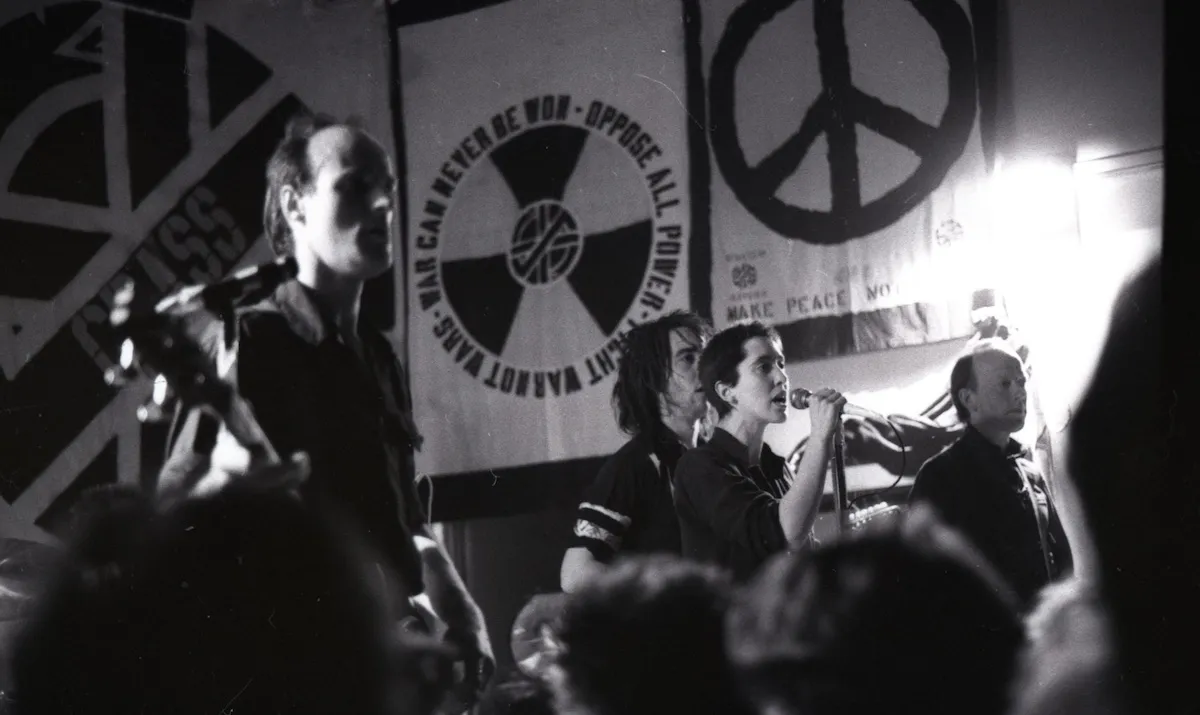 Photo: Crass, via consequence.net
"The moment radical art enters the mainstream, it stops being radical," argues Dr. Rebecca Walsh, whose research at Goldsmiths focuses on subcultural preservation. "British culture has developed sophisticated mechanisms for containing subversion by giving it official recognition while keeping it at arm's length."
This containment operates through what might be called the "heritage trap" — the process by which radical cultural movements are retrospectively celebrated once they're safely historical and their political teeth have been removed.
Literary Archaeology
In literature, the pattern manifests through what publishers call "the drawer novel" — the book that gets written first but published last, if at all. These works often contain an author's most experimental ideas, their most direct political statements, their least commercially viable insights. When they eventually surface, usually after the author has established commercial credibility, they frequently prove more influential than the work that made their reputation.
Consider the case of J.G. Ballard's early short stories, many of which were rejected by mainstream publishers and appeared in small science fiction magazines. These pieces, which explored themes of psychological breakdown and social collapse with unflinching directness, were considered unpublishable when written. Decades later, they're recognised as prophetic analyses of contemporary alienation.
 Photo: J.G. Ballard, via images.squarespace-cdn.com
"The publishing industry has always functioned as a filtering mechanism," observes literary agent Sarah Chen, who specialises in experimental fiction. "But the filter doesn't just remove work that's commercially unviable — it removes work that's politically uncomfortable. The most radical writing often has to find alternative routes to readers."
The BBC Paradox
The BBC presents a particularly complex case study in institutional radicalism. As a publicly funded broadcaster with a mission to serve the public interest, it has historically provided platforms for experimental and politically challenging work. But this work is typically scheduled in slots that ensure minimal mainstream exposure — late at night, on minority channels, or in formats that limit their reach.
Radio 3's late-night programmes have consistently showcased avant-garde music and experimental audio art that would never reach daytime schedules. BBC Four documentaries have explored controversial historical topics with a frankness that mainstream programming avoids. The corporation's digital platforms host content that challenges conventional narratives about British history and identity.
"The BBC has become expert at fulfilling its public service mission while avoiding political controversy," suggests media analyst Dr. Michael Roberts. "It provides platforms for radical work, but in contexts that ensure it won't reach audiences large enough to cause trouble."
Theatre's Hidden Rooms
British theatre has its own mechanisms for quarantining radicalism. The most politically challenging work happens in studio spaces rather than main stages, in late-night slots rather than evening performances, in limited runs rather than extended seasons. The Royal Court's Upstairs theatre, the National Theatre Studio, the Almeida's late shows — these spaces function as laboratories for ideas too risky for main-stage production.
But this separation serves multiple functions. It protects radical work from commercial pressures while providing established institutions with progressive credentials. It allows audiences to seek out challenging material while ensuring that casual theatregoers aren't confronted with uncomfortable ideas.
Playwright Caryl Churchill's early work exemplifies this dynamic. Her most experimental pieces were developed in small spaces with minimal resources, away from mainstream critical attention. Only after proving their artistic value in marginal contexts were they transferred to larger stages and wider recognition.
 Photo: Caryl Churchill, via theatreplays.uk
Digital Underground
The internet has transformed but not eliminated these patterns of cultural quarantine. Digital platforms have created new spaces for radical expression, but they've also developed new mechanisms for limiting reach. Algorithm-driven content distribution can be as effective as editorial gatekeeping in determining which ideas circulate widely.
British artists working online have discovered that the most politically challenging content often performs poorly in terms of engagement metrics, not because audiences reject it, but because platform algorithms favour content that generates immediate positive responses. Work that makes people think rather than react tends to get buried.
"Social media has democratised cultural production but not cultural distribution," argues digital culture researcher Dr. Priya Sharma. "The most radical work is still happening at the margins, but now the margins are algorithmic rather than institutional."
The Question of Complicity
This raises uncomfortable questions about the relationship between British cultural institutions and radical expression. Is the consistent relegation of subversive work to secondary formats a form of enlightened tolerance or sophisticated censorship? Does providing marginal platforms for radical ideas represent genuine commitment to cultural diversity, or a strategy for containing political challenge?
The answer may be both. British culture's genius for institutional compromise has created spaces where radical ideas can survive and develop without threatening established power structures. This has preserved important cultural work that might otherwise have been lost, but it has also ensured that such work rarely reaches audiences large enough to create significant social change.
The Underground as Ecosystem
Perhaps the most productive way to understand Britain's relationship to cultural radicalism is ecological rather than political. The margins function as breeding grounds for ideas that may eventually influence mainstream culture, but only after being sufficiently domesticated. This process takes time — often decades — during which radical ideas circulate in subcultural contexts, gradually building influence and losing their most threatening aspects.
The result is a cultural ecosystem that appears more conservative than it actually is, because its most innovative elements remain invisible to casual observation. The real action happens in the spaces between official culture — in the gaps, the footnotes, the B-sides, the late-night slots where tomorrow's orthodoxies are being quietly developed.
This system has produced some of Britain's most important cultural innovations, from punk to grime, from experimental literature to avant-garde theatre. But it has also ensured that such innovations remain safely quarantined from mainstream political discourse until their radical potential has been neutralised.
The question facing contemporary British culture is whether this pattern represents a sustainable form of cultural renewal or a sophisticated mechanism for preventing real change. As digital platforms reshape how culture circulates, the traditional boundaries between mainstream and margin are becoming increasingly porous. The radical ideas that once hid in B-sides and footnotes are finding new ways to reach wider audiences.
Whether this represents genuine democratisation or simply new forms of containment remains to be seen. What's certain is that British culture's relationship to its own radical traditions is more complex and contradictory than either its critics or defenders typically acknowledge. The underground may be where the most important work happens, but it's also where that work can be safely ignored by those with the power to implement the changes it demands.