Temporal Fragments: When British Photographers Collapse Time to Expose Truth
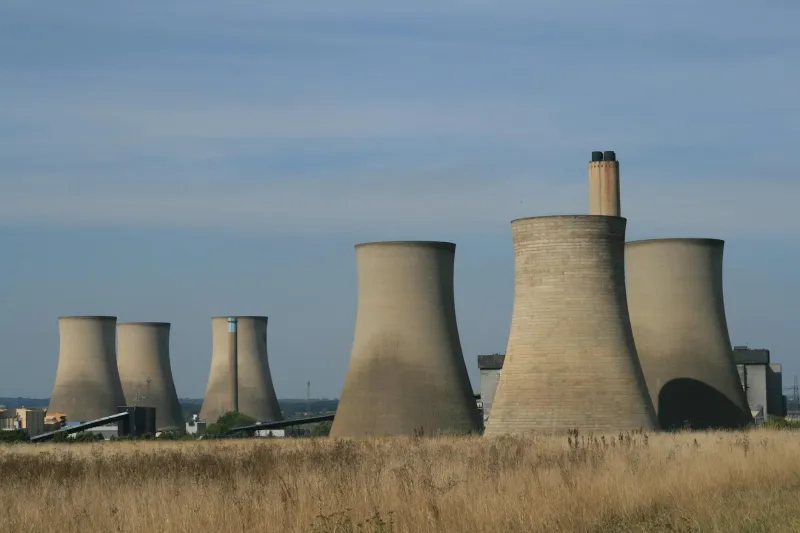
The Archaeology of Now
Stand in the exact spot where a photographer once captured a thriving pit village in 1975, and you might find yourself staring at a retail park car park. Hold up the original image against the contemporary view, and something profound happens in the space between then and now — a conversation begins that neither time period could have on its own.
This is the territory being explored by a growing cohort of British photographers who are systematically returning to locations documented in archival images, creating what might be called temporal archaeology through the lens. The practice, which has gained momentum over the past decade, involves meticulous research to identify exact vantage points from historical photographs, then rephotographing the same scenes in the present day.
"It's not about nostalgia," insists Sarah Chen, whose series 'Industrial Palimpsest' pairs 1960s images of Sheffield's steel foundries with contemporary shots of the same coordinates, now occupied by university buildings and coffee shops. "It's about making visible the violence of erasure that happens when we call change 'progress' without examining what's been lost."
The Ethics of Temporal Witness
The methodology raises immediate questions about authorship and exploitation. When photographer James Morrison recreated a 1984 image of a family outside their condemned terraced house in Liverpool — now the site of a luxury development — whose story was being told? The original photographer's documentation of housing crisis, or Morrison's commentary on gentrification?
"There's an inherent tension in appropriating someone else's moment," Morrison acknowledges. "But that tension is productive. The original image captured one form of displacement; my rephotograph captures another. Together, they reveal patterns that neither could show alone."
The practice demands rigorous ethical consideration. Unlike street photography, which captures spontaneous moments, these temporal revisitations are deliberate acts of cultural archaeology. The photographers must navigate not only the technical challenge of matching perspective and lighting conditions, but the more complex question of whose narrative they're serving.
Memory's Geography
What emerges from these temporal juxtapositions is a map of Britain's selective amnesia. The locations chosen for rephotography — former mining communities, cleared slums, demolished housing estates, abandoned seaside resorts — represent sites where official narratives of improvement clash with lived experiences of loss.
Photographer Malik Rahman's ongoing project 'Twice Seen' focuses exclusively on postwar social housing estates. His paired images — brutalist towers from the 1970s alongside their current incarnations as mixed-use developments — reveal how architectural ideology translates into social reality over decades.
"The original photographers were often documenting what they saw as problems to be solved," Rahman explains. "When I rephotograph the same locations, I'm documenting the solutions — and questioning whether they solved the right problems."
The Mechanics of Time
The technical process of temporal rephotography requires obsessive attention to detail. Photographers spend months researching weather conditions, seasonal changes, and urban development patterns to understand why the original image looked as it did. They use GPS coordinates, architectural landmarks, and shadow analysis to identify exact camera positions.
But the real work happens in the space between the two images. When displayed as diptychs or overlays, the temporal pairs create what art historian Dr. Rebecca Walsh calls "chronological friction" — a productive discomfort that forces viewers to confront the mythology of linear progress.
"These images function as evidence in a trial where the defendant is our collective relationship to time," Walsh argues. "They make visible the fact that 'then' and 'now' exist simultaneously in the landscape, in the people who lived through both moments, in the systems that enabled the transformation."
Digital Archaeology
The rise of digital archives has transformed the accessibility of historical images, enabling photographers to discover and work with material that was previously buried in institutional collections. Projects like Britain from Above and the Historic England Archive have democratised access to aerial photography and architectural documentation spanning decades.
This digital availability has also changed the nature of the practice. Where earlier temporal photography projects were limited by what images photographers could physically access, contemporary practitioners can work with vast databases of historical material, selecting sites based on thematic rather than merely practical considerations.
The Politics of Repetition
Perhaps the most radical aspect of temporal rephotography is its insistence that the past remains active in the present. By refusing to treat historical images as sealed artifacts, these photographers position them as ongoing documents of processes that continue to unfold.
When photographer Lisa Patel rephotographed the site of a 1970s anti-racism demonstration in East London — now a gentrified street of artisanal bakeries — the resulting diptych didn't just document urban change. It suggested that the political tensions captured in the original image had been displaced rather than resolved.
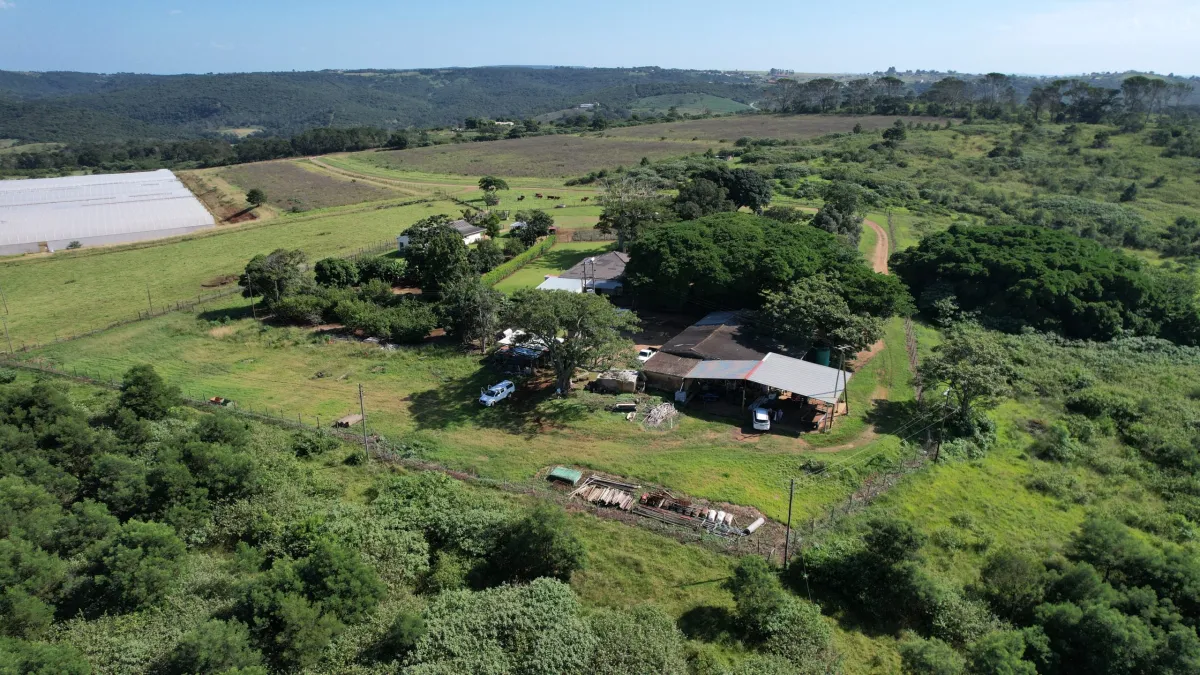 Photo: East London, via events.bkb.co.za
"The camera doesn't lie, but it doesn't tell the whole truth either," Patel reflects. "When you photograph the same place twice, separated by decades, you're not just documenting change. You're creating a space where multiple truths can exist simultaneously."
This multiplicity is perhaps the practice's greatest strength. In an era of polarised narratives about Britain's recent past — whether the postwar consensus represented progress or decline, whether deindustrialisation was inevitable or engineered — temporal photography offers a more complex proposition. It suggests that the past and present are not sequential but layered, not resolved but ongoing.
The photographers working in this space are not just documenting change; they're creating new forms of historical consciousness. Their images propose that understanding Britain's present requires not just looking forward, but learning to see the multiple timelines that converge in every landscape, every street corner, every ordinary place where extraordinary transformations have occurred.
In the collision between then and now, these photographers are discovering, lies the possibility of understanding what Britain has become — and what it might yet choose to be.