Salvage Culture: Britain's Artists Forge Tomorrow from Yesterday's Waste
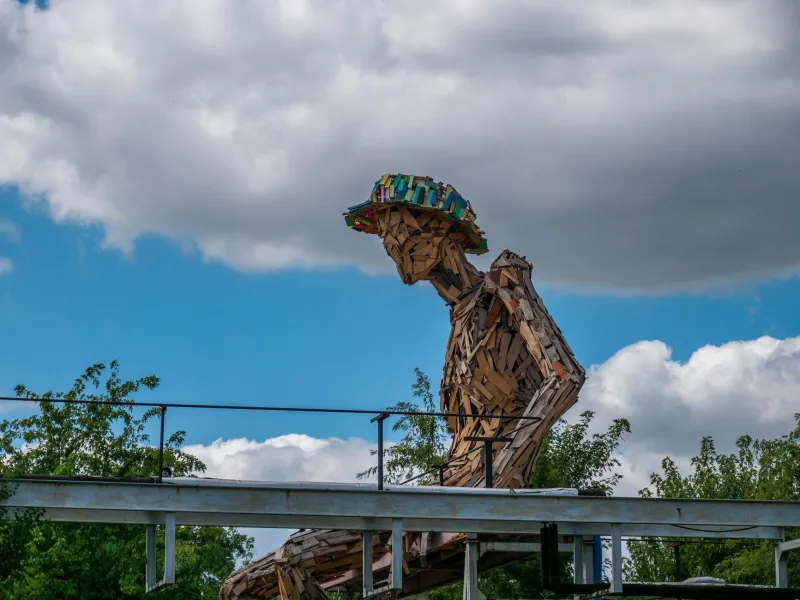
The Archaeology of Now
In a converted Victorian warehouse in Hackney, sculptor Maya Chen assembles her latest piece from components that most people would consider rubbish: a 1970s television cabinet, discarded medical equipment, and fabric samples from a defunct upholstery firm. This is not poverty aesthetics or conceptual provocation—it represents a fundamental shift in how Britain's emerging artists approach material culture.
"I haven't bought new materials in three years," Chen explains, running her hands across a section of reclaimed mahogany. "Everything I need already exists somewhere, usually within a five-mile radius of my studio. The challenge isn't finding materials—it's learning to see them differently."
Chen belongs to a growing cohort of British artists who have turned salvage into both practice and philosophy. From Glasgow to Brighton, young creatives are building careers around other people's discards, creating a distinctly British response to global environmental crisis and economic precarity.
The New Materialists
This movement extends far beyond individual artistic practice. In Manchester, the Waste Not collective has established a network of artists, designers, and makers who share resources salvaged from across the city. Their monthly "material swaps" draw hundreds of participants, creating an alternative economy based on reuse rather than consumption.
"We're not just making art from rubbish," explains collective member David Roberts, a furniture designer who sources exclusively from house clearances and demolition sites. "We're questioning the entire premise of newness as value. Why should creativity require virgin materials when the world is already full of perfectly good stuff that nobody wants?"
The aesthetic emerging from this movement defies easy categorisation. Unlike the polished recycling narratives favoured by established institutions, these artists embrace the patina of previous use. Scratches, stains, and wear patterns become integral to the final work rather than flaws to be concealed.
Textile artist Sarah Blackwood, who creates large-scale installations from clothing donated to charity shops, describes this approach as "biographical making." Her pieces carry traces of their previous lives—a child's paint stain here, a repair patch there—creating artworks that function as accidental social history.
Economics of Ingenuity
The financial realities facing young artists in contemporary Britain cannot be separated from their material choices. With studio rents in London averaging £400 per square metre annually and traditional art supplies increasingly expensive, salvage represents both practical necessity and creative opportunity.
"The art world talks about 'challenging conventions,' but it still expects artists to work within very expensive material parameters," observes Dr Rebecca Martinez, who studies alternative art economies at Goldsmiths. "This generation has found a way to bypass those expectations entirely. They're creating their own value systems."
The numbers support this analysis. A recent survey by the Artists' Union revealed that 67% of artists under thirty regularly source materials from non-commercial channels, compared to just 23% of those over fifty. This generational divide reflects not just different attitudes towards consumption, but fundamentally different relationships with material culture itself.
Yet the economic argument only tells part of the story. Many artists in this movement come from middle-class backgrounds and could afford traditional materials if they chose to. Their commitment to salvage represents a philosophical stance as much as a practical one.
The Aesthetics of Imperfection
Britain's salvage artists have developed a distinctive visual language that celebrates rather than conceals the history embedded in their materials. This approach stands in marked contrast to both the pristine finish of commercial design and the aggressive deterioration favoured by certain conceptual art movements.
Ceramic artist Tom Williams, who creates vessels from clay reclaimed from demolished buildings, describes his process as "collaborative archaeology." Each piece incorporates fragments of brick, mortar, and tile, creating objects that literally embody the spaces they came from.
"When I'm working with clay that's been part of someone's kitchen wall for eighty years, I'm not just making a pot," Williams explains. "I'm continuing a conversation that started before I was born. The material has its own agenda."
This dialogue between artist and material produces works that resist the smooth perfection of machine manufacture. The resulting aesthetic—rough, layered, bearing visible traces of time and use—has begun to influence mainstream design, appearing in everything from boutique hotel interiors to high-street fashion.
Institutional Resistance
The art establishment's response to salvage culture reveals deep tensions within Britain's cultural sector. While publicly embracing sustainability rhetoric, many institutions continue to privilege works made from expensive, newly manufactured materials. Insurance policies, conservation requirements, and curatorial preferences all favour objects with clear provenance and predictable behaviour over time.
"There's still a perception that art made from found materials is somehow less serious," argues curator Helen Price, who organised the recent "Reclaimed" exhibition at the Whitechapel Gallery. "But these artists are engaging with some of the most pressing questions of our time: environmental collapse, economic inequality, the nature of value itself."
The commercial art market presents additional challenges. Collectors often struggle to understand how to value works made from materials that cost nothing, while galleries worry about the long-term stability of pieces incorporating unknown substances and aged components.
Yet signs of change are emerging. The Turner Prize shortlist increasingly features artists working with found materials, while auction houses have begun developing new categories to accommodate works that resist traditional valuation methods.
Global Context, Local Character
While salvage-based art practices exist worldwide, the British iteration carries distinctive characteristics shaped by local conditions. The country's particular combination of post-industrial decay, charity shop culture, and environmental consciousness has produced a movement that feels authentically rooted in place.
"There's something very British about this approach to making," observes cultural historian James Morton. "The careful hoarding, the transformation of the humble into something significant, the refusal to waste—it connects to deeper traditions of thrift and ingenuity that go back centuries."
This connection to national character may explain why the movement has gained such traction among both artists and audiences. In an era when British identity feels increasingly uncertain, the act of creating something new from something old offers a metaphor for cultural renewal that resonates beyond the art world.
The Question of Authenticity
As salvage culture gains recognition, questions emerge about its potential co-option by commercial interests. Major brands have begun incorporating "upcycled" elements into their marketing, while high-end galleries promote "sustainable art" as the latest trend.
This attention brings both opportunities and dangers. Increased visibility and market interest can provide financial stability for artists previously operating at the margins. But it also risks transforming a practice born from necessity and conviction into mere aesthetic choice.
"The test will be whether this movement can maintain its integrity as it gains institutional support," suggests Chen, the Hackney sculptor. "The moment salvage becomes a brand rather than a practice, we'll have lost something essential."
For now, Britain's salvage artists continue their quiet revolution, transforming waste into wonder one rescued object at a time. Whether their example can inspire broader cultural change remains to be seen, but their work offers a glimpse of what creativity might look like in a world that has learned to value what it already has rather than always reaching for something new.
In studios across the country, the future is being built from the past, one salvaged piece at a time. The question is not whether this movement will survive, but whether the rest of us will be wise enough to learn from it.