Lost in Translation: How Foreign Misreadings Reveal Britain's Hidden Self
The Boomerang Effect of Cultural Export
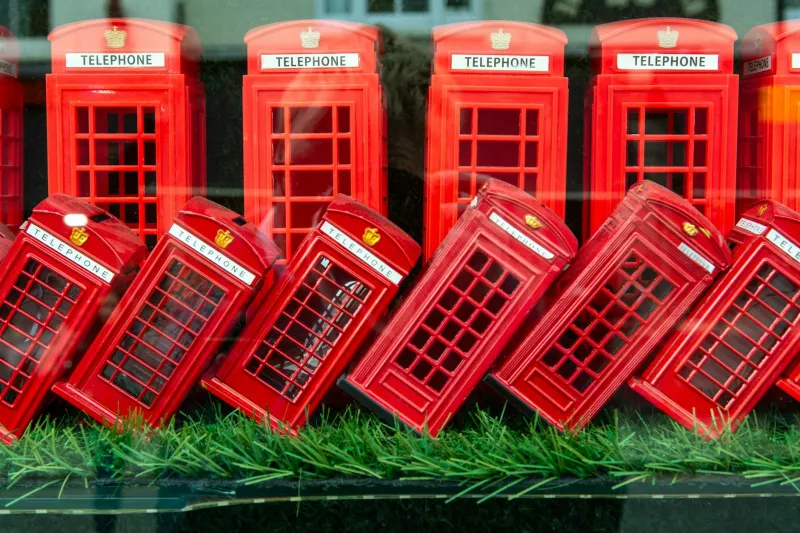
A red telephone box sits in a shopping centre in Mumbai, converted into a coffee kiosk advertising "Authentic British Experience." The irony is multiple: the box is fibreglass, not cast iron; it's painted in the wrong shade of red; and most tellingly, it represents a technology that disappeared from British streets before many of its admirers were born. Yet this misreading tells us something profound about how cultural symbols acquire meaning when they cross borders — and what happens when they return home, transformed by foreign interpretation.
The phenomenon of British cultural symbols being exported, misunderstood, and reimported in altered form has accelerated in the digital age. What emerges from this process isn't simply cultural dilution, but a form of inadvertent criticism — a mirror held up by outsiders that reveals aspects of British identity that insiders prefer not to examine.
The Sincerity Trap
Perhaps nowhere is this more evident than in the global reception of British irony. On international social media platforms, British self-deprecation is frequently taken at face value, creating a feedback loop where foreign audiences respond to British ironic statements with earnest sympathy or advice.
"Americans keep trying to help me solve problems I've mentioned ironically," observes Dr. Helen Cartwright, a linguistics professor at Manchester who has spent three years studying cross-cultural communication on Twitter. "But their literal readings often expose the fact that beneath the irony, the problems are actually real."
The example she cites is telling: British users frequently tweet ironically about housing costs, transport delays, or NHS waiting times. International followers, missing the ironic register, respond with genuine concern and practical suggestions. The British users then face an uncomfortable choice: maintain the ironic stance and appear callous, or acknowledge that their "joke" described actual hardship.
"Foreign literalism forces us to confront whether our irony is a coping mechanism or a form of denial," Cartwright suggests. "When someone from outside the culture takes our complaints seriously, we have to decide whether we want to be taken seriously."
Heritage as Performance
The global appetite for British "heritage" has created a tourism industry that packages cultural symbols for international consumption. But the process of making culture exportable necessarily simplifies and distorts it. The result is what cultural critic James Morrison calls "performed Britishness" — a version of national identity designed for foreign consumption that gradually influences domestic self-perception.
Consider the global popularity of afternoon tea, now more widely practised in hotels in Singapore and New York than in British homes. The ritual has been standardised, aestheticised, and stripped of its class associations to become a globally recognisable symbol of British refinement. But this export version has begun to influence how Britain markets itself domestically.
"We've started performing our own culture back to ourselves through foreign eyes," Morrison argues. "The afternoon tea served in British hotels now resembles the international version more than any historical British practice. We've imported our own export."
The Authenticity Paradox
This creates what might be called the authenticity paradox: the more successfully British culture travels internationally, the less it resembles its original form. But rather than representing simple cultural loss, this transformation reveals tensions that were always present but previously hidden.
Take the global fascination with British politeness, often represented through exaggerated stereotypes about queuing and saying "sorry." International media frequently portrays these behaviours as charming eccentricities, missing their function as mechanisms of social control and class distinction.
"Foreign romanticisation of British politeness ignores its exclusionary aspects," notes Dr. Priya Sharma, whose research at King's College London focuses on cultural translation. "But when that romanticised version gets reflected back to us, it forces us to examine whether our politeness is really as inclusive as we like to think."
 Photo: King's College London, via assets-global.website-files.com
Digital Distortion
Social media has intensified these processes of cultural misreading and reflection. British cultural references are constantly being decontextualised, recontextualised, and misunderstood by international audiences. But these misunderstandings often prove more revealing than accurate interpretations.
The global popularity of British panel shows like "Would I Lie to You?" has created international audiences who understand the format but miss the cultural specifics that make the humour work. Foreign fans often interpret the shows as celebrations of wit and creativity, missing the class dynamics and cultural gatekeeping that shape who gets to participate.
"International audiences see British panel shows as democratic spaces where anyone can be funny," observes media studies lecturer Dr. Sarah Chen. "They don't see that the 'anyone' is actually a very specific type of person — usually white, male, university-educated, and from a particular class background."
The Mirror's Edge
Perhaps the most unsettling aspect of foreign misreadings of British culture is how often they prove accidentally perceptive. When international observers describe British reserve as "emotional unavailability" or British understatement as "passive aggression," they're not simply misunderstanding cultural norms — they're identifying their psychological and social functions.
Cultural anthropologist Dr. Michael Roberts, who has studied how British expatriates navigate foreign interpretations of their behaviour, argues that external perspectives often cut through cultural self-justification.
"Living abroad forces you to see your own cultural behaviours through foreign eyes," Roberts explains. "British expats frequently discover that what they considered polite restraint reads as coldness to others, or that what they thought was modest self-deprecation comes across as fishing for compliments."
The Politics of Misreading
The process of cultural misreading is never neutral. Foreign interpretations of British culture are shaped by power dynamics, historical relationships, and contemporary political contexts. Former colonies often read British cultural symbols through the lens of imperial history, while European neighbours interpret them in the context of Brexit and ongoing political tensions.
These politically inflected misreadings can be particularly revealing. When European commentators describe British exceptionalism as "island mentality," or when former colonial subjects reinterpret British cultural exports as neo-imperial soft power, they're not simply misunderstanding British intentions — they're identifying patterns that British culture itself prefers not to acknowledge.
The Productive Power of Misunderstanding
Ultimately, foreign misreadings of British culture function as a form of inadvertent cultural criticism. They reveal the gaps between how Britain sees itself and how it appears to others, between cultural self-image and cultural reality.
This isn't simply a matter of correcting misunderstandings or protecting cultural authenticity. Instead, it's an opportunity to use external perspectives as tools for internal examination. When foreign observers misread British irony as sincerity, or British politeness as exclusion, they're not just getting things wrong — they're identifying truths that insiders are too close to see.
The red telephone box in Mumbai, with its wrong shade of paint and anachronistic technology, might be a poor representation of British engineering. But as a symbol of how cultures travel, transform, and return home changed, it's remarkably accurate. It suggests that understanding British culture requires not just looking inward, but learning to see ourselves through the eyes of those who get us completely wrong — and discovering how often their mistakes reveal truths we'd rather not acknowledge.