Ink in the Margins: The Secret Lives of Britain's Annotated Library Books
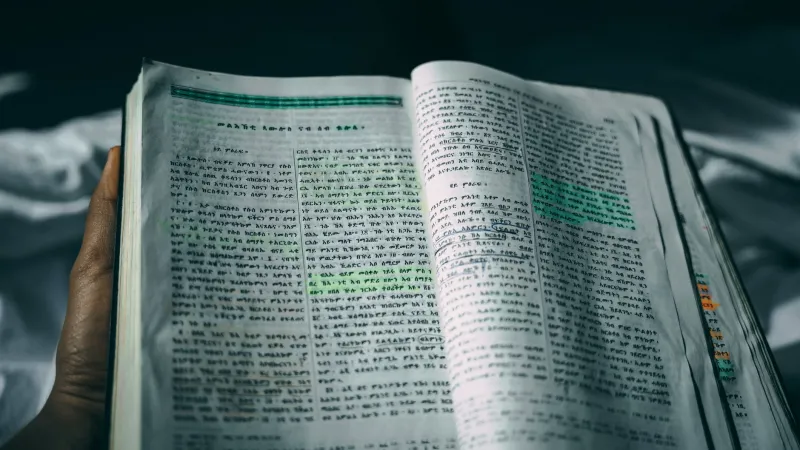
There is a particular thrill in opening a library book and discovering that someone has been there before you — not merely as a borrower, but as a respondent. A single underlined sentence. A question mark bristling with indignation. A small, careful asterisk beside a passage about grief. These are the traces of a reading life that was never meant to be shared, yet somehow endures, passed silently from stranger to stranger across decades of borrowing.
Britain's public libraries are, among other things, accidental archives of the nation's private mind. The marginalia left in their collections constitutes a vast, unindexed literature — one that no publisher commissioned and no editor approved, yet which speaks with an intimacy that polished prose rarely achieves.
A Conversation Across Time
Marginalia has a long and distinguished history. Renaissance scholars filled their volumes with commentary; Samuel Taylor Coleridge elevated the practice to an art form. But the marginalia of the public library is something altogether different in character. It is not the annotation of ownership — the scholar marking up a personal copy — but something more transgressive and more vulnerable: the annotation of the borrowed. Someone has written in a book that does not belong to them, knowing, at some level, that another reader will one day find it.
This lends library marginalia a quality of confession. The reader who underlines the line 'she had always known she would leave' in a mid-century novel is not performing scholarship. They are, in some quiet and perhaps unconscious way, leaving a record of recognition. The reader who writes 'complete nonsense' beside an author's political aside is conducting a debate with a writer who will never answer back. Both acts are intimate. Both are, in their way, forms of speech directed into a void — the kind of speech that Britain, as a culture, has always found easier than the face-to-face variety.
The Class Politics of the Written Word
It would be naive to treat library marginalia as a democratic phenomenon without examining the hierarchies that shape it. Handwriting alone carries enormous social information. The copperplate precision of an older annotator — likely educated in an era when penmanship was a measure of moral character — sits in visible contrast to the biro scrawl of a later reader who never learned to form letters with the same deliberate care. Both are present in the same volume, sometimes on the same page, their scripts in silent dialogue about education, era, and expectation.
The content of annotations, too, reflects the uneven geography of British intellectual culture. In university towns — Oxford, Cambridge, Durham, St Andrews — library marginalia tends towards the argumentative and the referential, bristling with counter-citations and the particular arrogance of the academically trained. In the branch libraries of former industrial towns, the annotations are often more personal: less concerned with disputing the text than with recognising something in it, marking the moment where a borrowed story touched a lived experience.
Neither mode is more valuable. But only one of them is likely to be studied. The academy has always been more comfortable with the marginalia of scholars than with the marginalia of ordinary readers, and this preference has shaped what we understand about how Britain actually reads.
Anger, Love, and the Uncorrected Fact
Among the most compelling categories of library annotation is the factual correction — the reader who cannot let an error pass unchallenged, who reaches for a pen with the quiet fury of someone who knows better. These corrections range from the gently pedantic ('actually, the treaty was signed in 1648') to the magnificently unhinged, entire paragraphs disputed in margins too narrow to contain the argument. There is something very British about this particular impulse: the private correction of a public text, the refusal to let the record stand, conducted entirely in solitude with no expectation of redress.
Equally revealing are the passages marked for what they meant to the reader rather than what they said to the world. Love scenes underlined with particular care. Descriptions of loneliness annotated with a single word: yes. Passages about death marked not with commentary but with a small, careful cross, as though the margin of a library book were an appropriate place to lay something down.
These are the annotations that most resist interpretation, and that most reward it. They suggest a reading population that used borrowed books the way other cultures use prayer: as a means of articulating what could not otherwise be said aloud.
What Libraries Do With What They Find
The institutional response to marginalia has shifted considerably over time. Earlier generations of librarians treated annotation as vandalism, and many books were withdrawn from circulation — or simply destroyed — on the grounds that they had been defaced. This position has softened, though it has not entirely disappeared. Some libraries now quietly preserve heavily annotated copies rather than replacing them, recognising that the accumulated responses of readers constitute a form of cultural record.
Others have gone further, launching community projects that invite patrons to annotate designated copies of local-interest texts, effectively legitimising the impulse that has always existed unofficially. These projects are admirable, but they also change the nature of the act. The annotation that is invited is a different thing from the annotation that is stolen — made in the knowledge that no one was supposed to see it, left anyway because the reader needed somewhere to put what they were feeling.
The Literature That Was Never Meant to Be
What the margins of Britain's library books ultimately preserve is a literature of the unguarded moment — the reading life stripped of performance, of the desire to appear well-read or properly critical. The reader who scrawls 'I feel exactly this' beside a line of poetry is not concerned with how they appear. They are, briefly and entirely, just a person who read something and was changed by it.
In a culture that has historically treated emotional expression as a form of weakness, and intellectual engagement as the preserve of those with the right credentials, these margins constitute a quiet rebellion. They are proof that Britain reads more deeply, feels more openly, and thinks more fiercely than it is usually prepared to admit in public. The annotations are the crossed lines of the nation's inner life — the places where the official silence breaks down and something true gets through.