Hidden Histories: The Political Vault Beneath Britain's Public Galleries
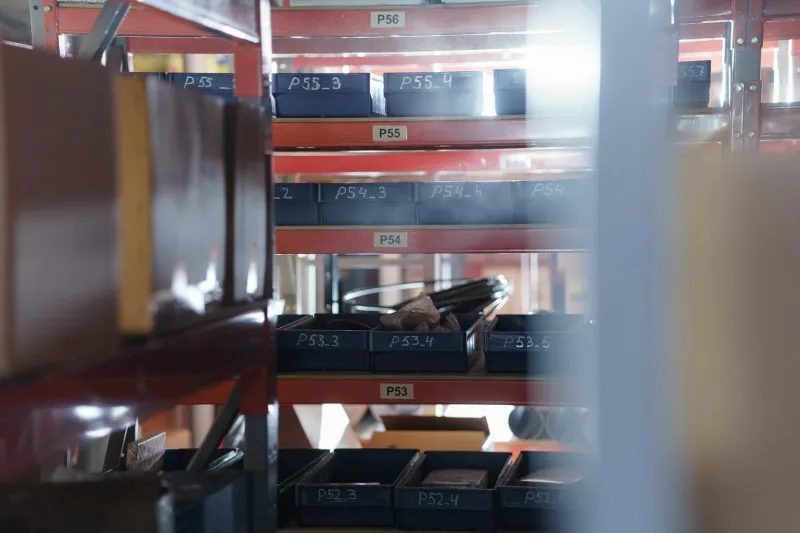
In the basement of the Tate Modern, beneath the polished concrete floors where millions of visitors tread annually, sits a work that has never seen daylight since its acquisition in 1987. The piece—a searing indictment of Thatcherism rendered in industrial materials—remains catalogued, preserved, and utterly invisible to the public who funded its purchase.
The Weight of Selection
This artwork is not alone. Across Britain's major public institutions, from the Tate network to regional galleries, an estimated 95% of permanent collections remain in storage at any given time. Whilst space constraints partly explain this statistic, the selection criteria for what emerges into public view reveals a more complex political calculus.
Dr Sarah Henley, former curator at Manchester Art Gallery, describes the process as "inherently ideological." Speaking from her office overlooking the Northern Quarter, she explains: "Every decision to display is simultaneously a decision to conceal. We tell ourselves it's about artistic merit or public interest, but those concepts are never neutral."
The numbers paint a stark picture. A freedom of information request submitted to five major UK institutions revealed that works addressing themes of social inequality, colonial history, and state power are significantly underrepresented in permanent displays compared to their presence in storage collections. At the National Gallery, for instance, contemporary works critiquing British foreign policy comprise 12% of recent acquisitions but less than 2% of displayed items over the past decade.
Voices from the Vault
Artist Priya Sharma learned this lesson firsthand when her installation examining the Windrush scandal was acquired by a prominent London institution in 2019. "They called it an 'important addition to the collection,'" she recalls. "Three years later, it's still in bubble wrap somewhere in South London whilst they display landscapes from the 1800s."
The acquisition represented a significant investment—both financial and ostensibly ideological. Yet the work's continued absence from public view raises questions about the gap between institutional rhetoric and practice. Museums frequently trumpet their commitment to diverse voices and contemporary relevance, but their exhibition schedules often tell a different story.
Curator James Mitchell, who has worked across several major UK institutions, argues that the storage-to-display pipeline reflects deeper structural issues. "There's an assumption that challenging work needs more 'contextualisation,'" he notes. "But context often becomes a euphemism for dilution. By the time we've added enough explanatory material to make administrators comfortable, the work's original power has been neutered."
The Architecture of Absence
The physical infrastructure of storage itself becomes politically significant. Climate-controlled warehouses in industrial estates house Britain's most radical artistic voices alongside insurance valuations and condition reports. These facilities, often located far from city centres, create a geographical metaphor for cultural marginalisation.
Visiting the storage facility for a major regional gallery—a converted warehouse forty minutes from the nearest town centre—the symbolism feels deliberate. Works addressing housing inequality sit in pristine conditions whilst communities struggle with overcrowding mere miles away. The irony is not lost on facility manager David Chen: "We spend more on preserving these critiques of social conditions than most councils spend addressing them."
Curatorial Gatekeeping
The selection process reveals the subjective nature of supposedly objective cultural judgements. Board meetings, donor concerns, and public relations considerations all influence which works transition from storage to gallery walls. Freedom of information requests reveal email chains discussing the "appropriateness" of displaying certain pieces during election periods or royal celebrations.
This gatekeeping extends beyond explicit censorship to more subtle forms of marginalisation. Works deemed "too specific" to contemporary British politics often remain stored whilst more generalised critiques of power receive exhibition space. The effect creates a sanitised version of artistic dissent—radical enough to signal institutional progressiveness but safe enough to avoid genuine controversy.
The Economics of Invisibility
Financial pressures compound these curatorial decisions. Public institutions increasingly rely on corporate sponsorship and wealthy donors, creating additional layers of influence over exhibition programming. A work critiquing banking practices faces different prospects when financial institutions fund gallery operations.
The storage system also enables institutional risk management. Acquiring controversial works demonstrates cultural engagement whilst keeping them stored avoids potential backlash. This approach allows museums to claim comprehensive collections whilst maintaining conservative display policies.
Democratising the Archive
Some institutions experiment with alternative approaches. The Whitworth in Manchester has initiated "Storage Stories," rotating displays of previously unseen works with minimal curatorial intervention. The programme reveals both the richness of hidden collections and the artificial nature of traditional selection processes.
Digital initiatives offer additional possibilities. Virtual exhibitions and online catalogues can bypass physical space constraints, though they lack the material impact of gallery encounters. The question remains whether digital access constitutes genuine public engagement or merely tokenistic transparency.
Beyond the Vault
The storage paradox reflects broader questions about cultural democracy and institutional power. When public funds acquire artworks that remain publicly invisible, the transaction reveals the gap between democratic rhetoric and elitist practice. The archive becomes not a neutral repository but an active instrument of cultural control.
As Britain grapples with questions of national identity and historical reckoning, the contents of institutional storage facilities offer alternative narratives to those presented in public galleries. The radical art gathering dust in climate-controlled warehouses represents voices and perspectives systematically excluded from mainstream cultural discourse.
The challenge facing British institutions is whether they will embrace this hidden diversity or continue privileging safe, established narratives. In the meantime, the most radical art in Britain remains precisely where power structures prefer it—out of sight, out of mind, and out of public conversation.