Drawn to Judgement: The Courtroom Sketch as Britain's Most Contested Witness
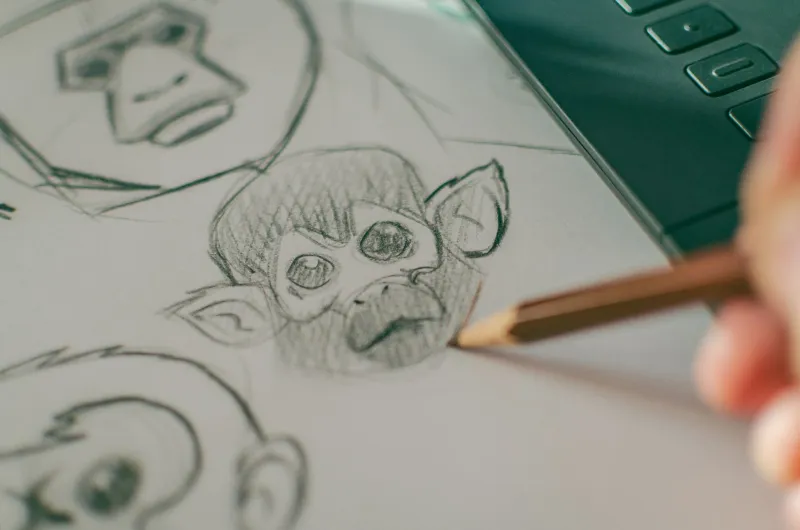
The prohibition on cameras in British courts is one of the most persistently discussed anomalies in the country's media landscape. Introduced under the Criminal Justice Act 1925 and only partially relaxed in recent years—with some filming now permitted in certain civil proceedings and, cautiously, in the Court of Appeal—it has created a visual vacuum at the heart of the justice system. Into that vacuum, for the better part of a century, has stepped the courtroom sketch artist.
Theirs is a peculiar vocation. Working from memory and rapid observation—sketching is itself prohibited within the courtroom in England and Wales, meaning that most artists work from notes and mental impressions, completing their drawings in the corridor outside—these practitioners produce images that appear in newspapers, on broadcast news programmes, and increasingly across digital platforms as the primary visual record of trials that may be among the most consequential events in their subjects' lives.
What those images actually communicate—and what they conceal—is a question that deserves far more scrutiny than it typically receives.
The Grammar of the Legal Image
Courtroom illustration has developed, over decades of practice, a recognisable visual grammar. Defendants tend to appear in a particular register: contained, often slightly diminished by the composition, surrounded by the architectural authority of the dock or the witness box. Judges are rendered with the gravity their office demands, their wigs and robes providing a readymade iconography of institutional weight. Barristers are frequently shown mid-gesture, caught in the rhetorical act, their physicality suggesting dynamism and purpose.
These conventions are not entirely conscious. They emerge from the practical constraints of the work—the need to establish spatial relationships quickly, to distinguish between figures in a crowded room, to provide a composition that will reproduce clearly at newspaper scale. But conventions, however practically motivated, carry ideological content. The consistent visual diminishment of defendants relative to the figures of legal authority is not merely compositional efficiency; it rehearses, in visual form, the power differential that the courtroom itself instantiates.
Consider the work of Julia Quenzler, one of Britain's most prolific and respected courtroom artists, whose sketches have appeared across all major broadcasters and publications. Her work is characterised by a documentary commitment that resists sensationalism—faces rendered with psychological complexity, scenes composed to convey the weight of proceedings rather than their drama. And yet even within this conscientious practice, choices accumulate. The angle from which a defendant is observed, the degree of detail afforded to their expression, the relationship between their figure and the surrounding architecture of authority—each of these decisions shapes the viewer's interpretation before any caption or commentary is added.
What the Sketch Cannot Be Neutral About
The courtroom sketch presents itself, by convention and by institutional context, as testimony—as a record of what occurred. Its association with journalism lends it the authority of reportage. And yet it is, fundamentally, an interpretive act. The artist has not merely recorded; they have selected, emphasised, and composed. They have made, in the most literal sense, an argument about what the scene means.
This is not a deficiency unique to courtroom illustration. All visual representation involves selection, and all selection involves interpretation. But the stakes in the legal context are unusually high. A sketch of a defendant rendered with visible menace—hunched posture, shadowed features, an expression that reads as coldness—does not merely report on a trial. It participates in the construction of guilt or innocence in the public imagination. It contributes to what might be called the pre-verdict verdict: the cultural adjudication that proceeds alongside the legal one.
High-profile British trials of recent decades have generated sketch archives that repay close reading in this light. The trials arising from the phone-hacking scandal, the inquiries into institutional child abuse, the proceedings against public figures whose cultural prominence made their legal exposure a matter of intense national interest—in each case, the sketch record reveals not merely what the courtroom looked like but what the artist, and by extension the commissioning editor, believed the audience needed to see.
Authority in Pencil and Chalk
The materials of courtroom illustration are themselves worth examining. The traditional media—pencil, chalk, watercolour—carry connotations of craft, of handmade authenticity, of an older and more considered form of visual production. In an era of digital immediacy, there is something conspicuously deliberate about the courtroom sketch. It announces itself as the product of human judgment rather than mechanical capture.
This is not merely aesthetic; it is rhetorical. The sketch says: a person was here, observed this, and made something from the observation. It claims a kind of witnessing that photography, paradoxically, cannot offer—not because photography is less accurate but because it is less obviously interpretive. The photograph presents itself as a window; the sketch announces itself as a view. And in announcing itself as a view, it invites the audience to trust the viewer.
That trust is, in the context of justice, a significant grant of authority. The courtroom sketch artist becomes, by default, the public's proxy witness—the person who was present so that the rest of us do not have to be, whose eyes we borrow to understand what the law is doing in our name.
The Performance of Justice Made Visible
British legal culture has always been, in part, a theatrical culture. The wigs, the gowns, the formalised language, the architectural staging of authority—these are not accidental features of the system but constitutive ones. They communicate something about the nature of law: that it is not merely a practical mechanism for resolving disputes but a performance of collective values, an enactment of the social contract.
Courtroom illustration participates in this performance. It extends the theatrical logic of the courtroom into the public sphere, translating the staging of justice into visual narrative. In doing so, it raises a question that sits at the heart of the entire enterprise: are these images documenting justice, or are they dramatising it?
The answer is almost certainly both, and the tension between those two functions is precisely what makes the form so culturally interesting. The courtroom sketch occupies the same ambiguous territory as all art that engages with power: it is simultaneously inside and outside the system it depicts, shaped by the conventions of the institution it observes whilst retaining the capacity—however modestly exercised—to see that institution from an angle the institution has not approved.
Witnessing Without Verdict
What audiences seek when they encounter courtroom illustration is, perhaps, not so different from what they seek in the courtroom itself: not merely information but meaning. The desire to understand how power operates, how guilt and innocence are determined, how the state exercises its authority over individuals—these are not merely procedural interests. They are cultural and moral ones.
The courtroom sketch, at its best, serves those interests honestly. It acknowledges its own partiality—the hand visible in every line—whilst providing a record that, however incomplete, insists on the humanity of everyone present. The defendant rendered with psychological complexity rather than visual menace; the judge depicted not as an icon of authority but as a person wearing the costume of authority; the barrister caught not in triumph but in the effort of argument—these choices, small as they are, constitute a form of ethical practice.
Britain's courtroom artists are, in the end, doing what all artists do when they engage with difficult material: they are finding a form adequate to the weight of what they have witnessed. That the form is contested, that every line carries an argument, is not a weakness. It is the condition of all genuine visual testimony.