Concrete Confessions: Reading Britain's Architectural Guilt in Stone and Steel
The Palimpsest City
Walk through Birmingham's Digbeth on any Tuesday afternoon, and you'll witness Britain arguing with itself in brick and mortar. Victorian warehouses squat beside 1960s concrete towers, which themselves cast shadows over gleaming glass developments that promise urban renaissance. This isn't urban planning—it's archaeological evidence of a nation that cannot quite decide what it wants to be.
Our cities have become inadvertent museums of ideological conflict, where each architectural era stands as testimony to the social ambitions and cultural anxieties of its time. Unlike continental Europe, where wars provided convenient blank slates for urban reimagining, Britain's built environment accumulated its contradictions organically, creating streetscapes that read like palimpsests—ancient texts where new writing overlays the old, but never quite obscures it entirely.
Victorian Certainty Meets Modernist Doubt
Consider Glasgow's Gorbals, where Sir Basil Spence's brutalist towers once rose like concrete cathedrals beside Victorian tenements. The towers are gone now, demolished in the 1990s amid acknowledgement of their social failures, but their absence speaks as loudly as their presence once did. The remaining streetscape tells a story of competing visions: the Victorian belief in moral improvement through architectural grandeur, the post-war faith in social engineering through concrete, and the contemporary market-driven approach that treats urban space as commodity rather than community.
The visual language here is unmistakable. Victorian Glasgow spoke in the vocabulary of empire—red sandstone that declared permanence, ornamental flourishes that proclaimed cultural sophistication, and civic buildings that positioned the city as Scotland's answer to Manchester's industrial might. When the brutalists arrived, they brought a different grammar: raw concrete that celebrated material honesty, repetitive fenestration that suggested democratic equality, and monumental scale that promised to house the masses with dignity.
The Grammar of Regeneration
In Cardiff's docklands, this architectural dialogue takes on additional complexity. Here, the conversion of Victorian warehouses into luxury flats sits alongside millennium-era cultural institutions like the Wales Millennium Centre, whilst the ghosts of demolished terraces haunt empty lots awaiting development. The architectural conversation becomes trilingual: industrial Welsh identity, devolved cultural ambition, and globalised urban regeneration speak simultaneously in different materials and scales.
The Wales Millennium Centre itself embodies this multiplicity—its copper and slate facade references Welsh industrial heritage whilst its contemporary form signals cultural modernity. Yet its relationship to the surrounding Victorian warehouses creates visual tension. Where Victorian architecture proclaimed imperial confidence through ornamental excess, contemporary cultural buildings often adopt a studied minimalism that can read as either sophisticated restraint or anxious self-effacement.
The Honesty of Architectural Accident
What makes Britain's urban palimpsest particularly revealing is its accidental nature. Unlike cities that underwent planned reconstruction, British urban centres evolved through pragmatic compromise rather than ideological coherence. This has produced streetscapes of startling honesty—architectural documents that record not just what we aspired to build, but what we could afford to build, what we dared to demolish, and what we lacked the courage to change.
Walk down any British high street and you'll encounter this phenomenon: Georgian terraces converted to Victorian shops, topped with 1970s office extensions, fronted by contemporary retail facades. Each layer represents a moment of cultural negotiation—between past and future, between preservation and progress, between collective memory and individual ambition.
Stone Memory and Steel Amnesia
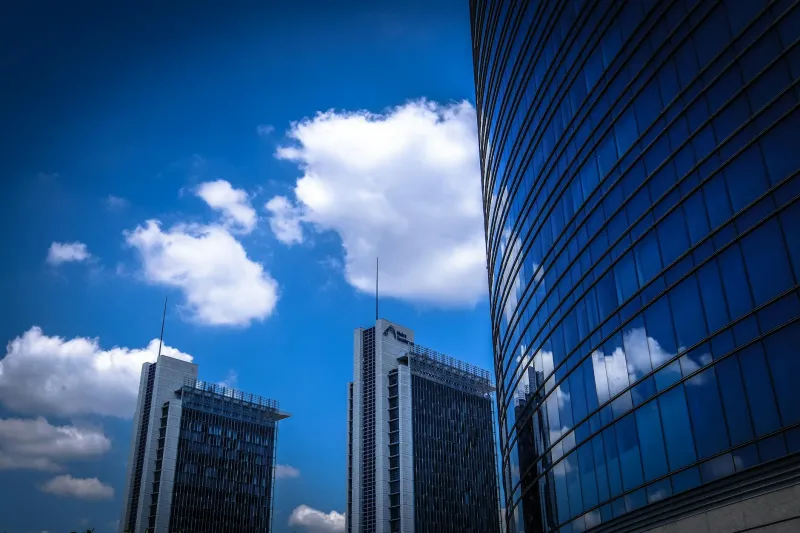
The materials themselves carry ideological weight. Victorian brick and stone promised permanence and moral solidity. Modernist concrete celebrated technological optimism and social democracy. Contemporary glass and steel signal transparency and global connectivity, yet often achieve the opposite—creating buildings that reflect everything whilst revealing nothing.
This material dialogue becomes particularly poignant in areas like Birmingham's Digbeth, where Victorian industrial architecture provides the backdrop for contemporary creative industries. Former jewellery workshops now house digital agencies, their red brick walls serving as Instagram-ready backdrops for the very cultural forces that have displaced traditional manufacturing. The irony is architectural: buildings constructed to house Britain's industrial might now shelter its post-industrial anxiety.
Reading the Urban Text
Perhaps Britain's reluctance to demolish its contradictions stems from a deeper cultural recognition that our built environment serves as collective memory. Unlike nations that periodically reinvent themselves through architectural tabula rasa, we have accumulated our ideological conflicts in stone and steel, creating cities that function as three-dimensional archives of social ambition and cultural doubt.
This architectural palimpsest offers a more honest account of British cultural development than any official history. Where textbooks present neat narratives of progress and decline, our streetscapes reveal the messier reality of competing visions, compromised ideals, and pragmatic accommodation. They document not just what we built, but what we inherited, what we adapted, and what we simply learned to live alongside.
The Future of Memory
As contemporary development increasingly favours demolition over adaptation, we risk losing this architectural honesty. The current preference for comprehensive redevelopment threatens to create urban environments that speak in single voices rather than the complex polyphony that has characterised British cities for centuries.
Perhaps the real cultural value of our architectural palimpsest lies not in its individual components but in their uncomfortable coexistence. These streetscapes where Victorian moral certainty meets brutalist social ambition meets contemporary market logic create a uniquely British form of cultural expression—one that acknowledges complexity rather than resolving it, that preserves contradiction rather than eliminating it.
In the end, our cities' greatest achievement may be their refusal to choose a single architectural language. Instead, they continue to speak in the accumulated voices of every era that has shaped them, creating urban environments that function as Britain's most honest cultural autobiography—written not in words, but in the borrowed light that filters between buildings of different ages, casting shadows that connect past and present in ways that no single architectural vision ever could.