Blood and Canvas: Where Crime Fiction Meets the Gallery Wall
The Scene of the Crime
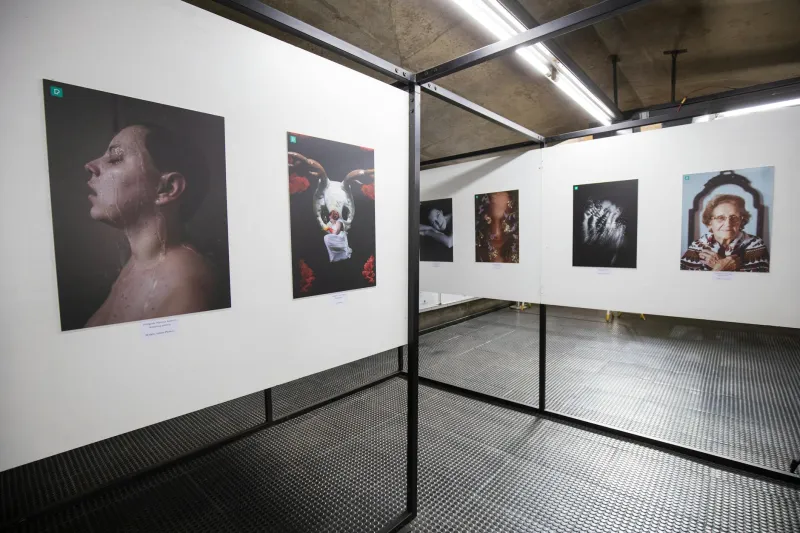
Walk into any contemporary British gallery today and you might stumble upon a crime scene. Not literally, of course, but the aesthetic language of detection—evidence bags as sculptural objects, forensic photography as fine art, police tape reimagined as installation material—has become increasingly prevalent in our cultural spaces. This convergence between crime fiction and visual art represents more than mere aesthetic borrowing; it signals a fundamental shift in how British culture processes its contemporary anxieties.
The relationship began tentatively. Early adopters like Cornelia Parker incorporated elements of investigation into her work, whilst galleries began hosting events around crime fiction launches. But what started as cross-promotional activity has evolved into something far more sophisticated: a shared vocabulary for examining the fault lines running through post-Brexit Britain.
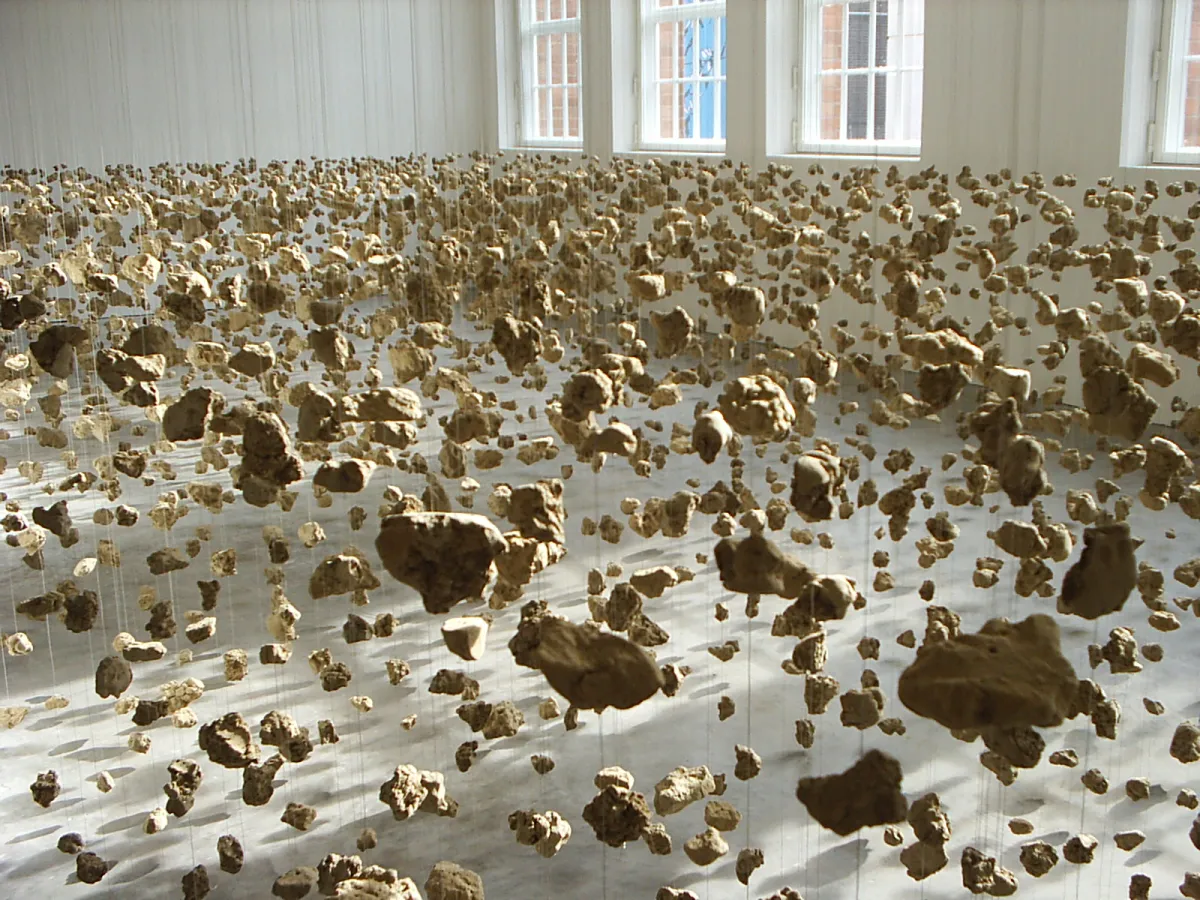 Photo: Cornelia Parker, via 4.bp.blogspot.com
Geography as Character
Both crime fiction and contemporary art have become obsessed with place in ways that traditional literary and artistic forms often overlook. The Nordic noir influence on British crime writing has taught domestic authors to treat landscape as character, whilst visual artists increasingly use site-specific work to interrogate the stories we tell about particular locations.
Consider how Tana French's approach to Dublin's psychology mirrors the way British artists like Jeremy Deller use specific locations to unpick national mythologies. Both understand that geography carries ideological weight—that a housing estate, a market town, or a stretch of coastline contains embedded narratives about class, opportunity, and belonging.
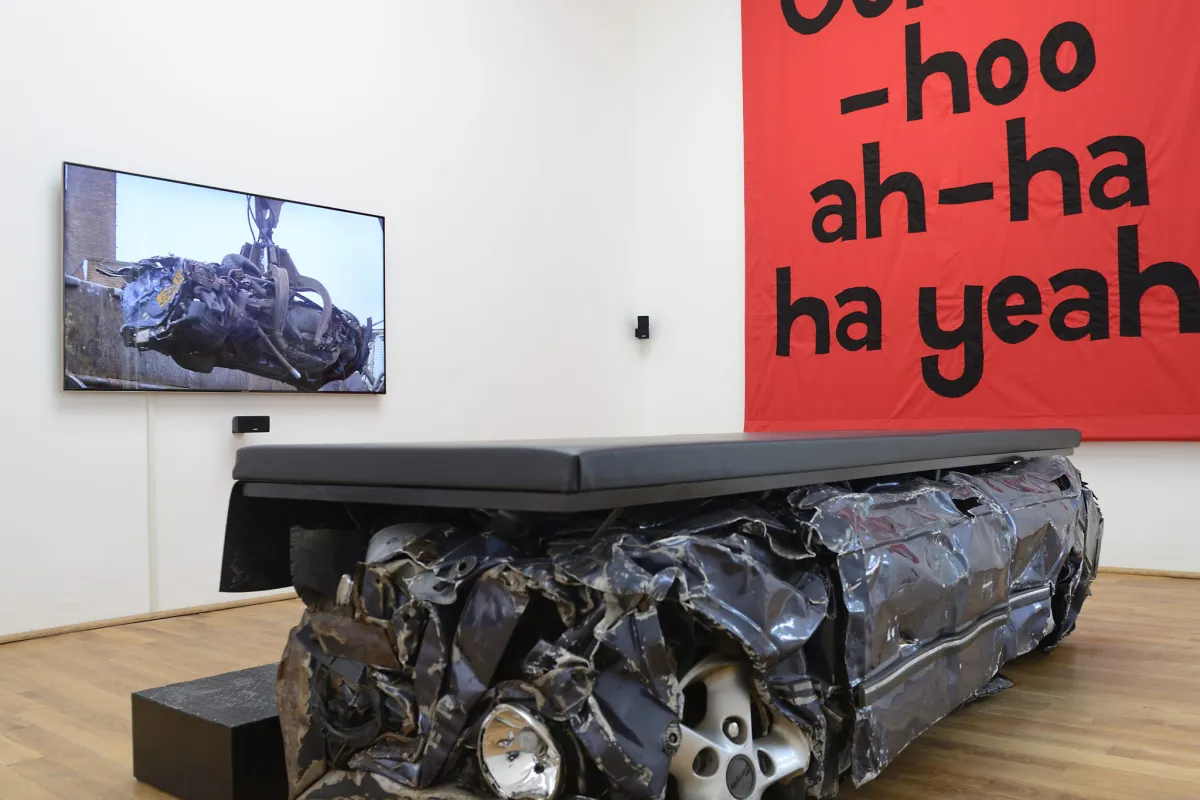 Photo: Jeremy Deller, via www.galerieartconcept.com
This geographical consciousness has produced some of the most compelling crossover work. Artist Zarina Bhimji's photography series documenting post-industrial landscapes shares DNA with the way crime writers like Val McDermid use Kirkcaldy or Ian Rankin deploys Edinburgh—not as mere backdrop, but as active participant in the moral universe being constructed.
The Democracy of Suspicion
What unites gallery visitors and crime fiction readers is a shared appetite for questioning authority. Both forms encourage active participation from their audiences—the gallery-goer piecing together conceptual frameworks, the crime reader solving puzzles alongside the detective. This participatory element has become crucial to how both mediums function as vehicles for social critique.
The contemporary art world's embrace of crime aesthetics often serves to highlight institutional failures. When an artist presents evidence bags containing objects from asylum seekers, or recreates a police interview room as gallery space, they're deploying the visual language of investigation to examine who gets to be believed, whose testimony counts, whose suffering registers as legitimate.
Similarly, the best contemporary British crime fiction uses the detective format to examine systemic inequalities. Writers like Abir Mukherjee and Vaseem Khan use crime narratives to explore how racism operates within institutions, whilst authors like Sophie Hannah and Elly Griffiths interrogate gender dynamics through mystery frameworks.
Class Consciousness in Different Frames
Perhaps nowhere is the convergence more apparent than in both forms' treatment of class. British crime fiction has always been class-conscious, but contemporary practitioners have refined this into sophisticated social analysis. The drawing rooms of golden age detection have given way to food banks, zero-hours contracts, and gig economy precarity as crime fiction grapples with modern inequality.
Visual artists working with crime aesthetics often make similar interventions. When they use police surveillance footage as source material, or recreate crime scenes using luxury materials, they're asking uncomfortable questions about who gets protection, whose security matters, and how violence becomes aestheticised when it happens to the right people in the right places.
The Comfort of Discomfort
Both crime fiction and contemporary art offer their audiences the peculiar pleasure of controlled discomfort. Readers know they'll encounter violence, betrayal, and moral ambiguity within the safe confines of narrative resolution. Gallery visitors similarly seek out challenging work within the protected space of cultural consumption.
This shared understanding of how to package difficult truths for willing audiences has made crime fiction and visual art natural allies in addressing Britain's contemporary moment. Both forms can present harsh realities about inequality, racism, and institutional failure whilst providing enough aesthetic pleasure to keep audiences engaged rather than simply appalled.
Future Evidence
As Britain continues to reckon with its imperial past and uncertain future, the alliance between crime fiction and visual art seems likely to deepen. Both forms excel at examining guilt—personal, collective, and institutional—whilst offering frameworks for thinking about justice that extend beyond simple punishment.
The most interesting work emerging from this convergence suggests that detection itself might be the most relevant cultural practice for our current moment. In an era of contested facts and competing narratives, both crime fiction and contemporary art offer methodologies for sifting evidence, testing hypotheses, and constructing coherent accounts from fragmentary information.
The gallery wall and the book spine may seem like unlikely partners, but they're increasingly asking the same question: in a country where the social contract has been broken, how do we begin to piece together what happened, who's responsible, and what justice might look like?