Abandoned at Chapter Nine: The Confessions Hidden in Britain's Charity Shop Shelves
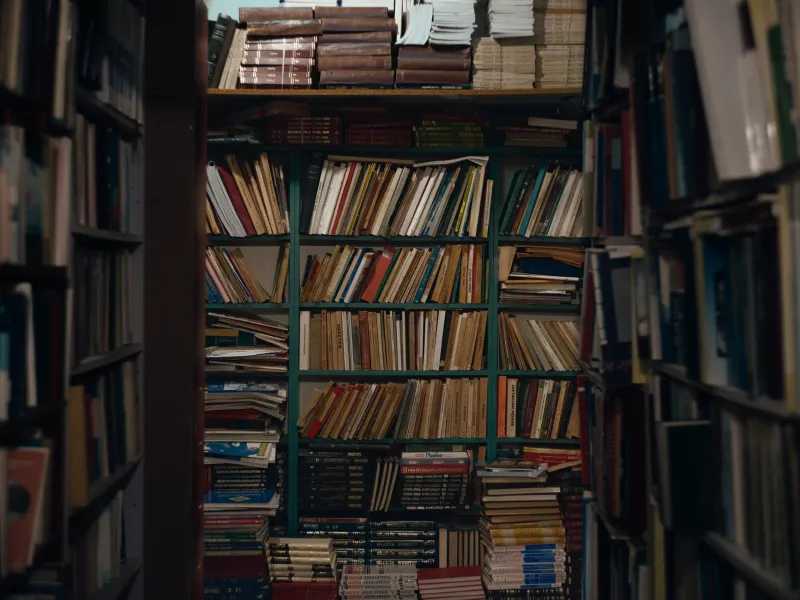
There is a particular edition of Middlemarch that appears in British charity shops with almost comic regularity. It is usually the Penguin Classics paperback, its spine cracked at approximately page one hundred and forty — deep enough into the novel to suggest genuine effort, not so deep as to suggest completion. Inside, there may be a bookmark: a receipt from a Pret a Manger, a Christmas card, or a strip torn from a newspaper. Sometimes there are annotations in the early chapters, pencilled with the enthusiasm of a reader who means business, that fade and then cease entirely as the pages proceed. The book has been donated, which means it has been given up on. Which means, somewhere in Britain, someone began Middlemarch with real intention and quietly stopped.
This is not a judgment. It is, rather, an invitation. The charity shop bookshelf is one of the most honest cultural archives in Britain precisely because it is not curated with self-presentation in mind. Unlike a home bookshelf — which is arranged, consciously or not, as a portrait of the reader — the donated book has been released from that function. What it carries inside its pages is involuntary testimony.
The Archaeology of the Interrupted Reading
Every charity shop volunteer who has sorted donations will recognise the taxonomy of the abandoned book. There is the book abandoned early — the bookmark at page thirty, the spine barely touched — which suggests a gift received gratefully and shelved promptly, or a purchase made in the momentum of a review, a recommendation, or a three-for-two offer that evaporated on contact with the actual prose. There is the book abandoned at the midpoint, which is the most interesting case: it implies genuine engagement, a relationship between reader and text that held for a time before something — difficulty, distraction, life — intervened.
And then there is the book abandoned near the end, which carries a different quality of confession. To stop reading with forty pages remaining is a specific act of will, or its absence. It suggests that the reader reached the point at which the book's resolution no longer felt necessary — that the experience of reading had served whatever purpose it was serving, and that purpose had concluded before the narrative did. This is not failure. It is a particular form of honesty about what reading is actually for.
The physical evidence left inside these books is its own literature. Receipts function as precise historical documents: they record where the reader was, what they were buying, on which date. A receipt from a Boots pharmacy in Wolverhampton, dated February 2019, tucked into page sixty-eight of The Luminaries, places a specific human being at a specific intersection of their life and the novel's. We know nothing else about them, but we know that much.
Aspirational Shelves and the Books We Mean to Be
The books that cycle most persistently through Britain's Oxfam shelves and Sue Ryder shops are revealing in their consistency. Literary prize winners appear in waves — Wolf Hall, Lincoln in the Bardo, The Testaments — their donation following their initial purchase by a year or two, the lag suggesting a period during which the book occupied a shelf with genuine intent before being released. Self-help volumes accumulate in patterns that track the anxieties of their era: mindfulness guides from the mid-2010s, books about digital detoxing, volumes on the neuroscience of habit.
These books were not purchased carelessly. They were bought by people who wanted, in some meaningful sense, to be the kind of person who had read them. The gap between that aspiration and its realisation — the gap that produces the donated, half-read book — is not a gap between intelligence and stupidity, or between ambition and laziness. It is the ordinary gap between the self we imagine on a good day and the self that actually sits down in the evening, too tired for Eliot, reaching instead for the remote control.
To browse a charity shop bookshelf is to encounter that gap in aggregate: the collective shape of British aspiration, rendered in donated paperbacks.
The Marginalia as Counter-Narrative
Some donated books arrive with marginalia, and these are the most extraordinary finds. A pencilled question mark beside a passage in a philosophy text. An underlined sentence in a novel about grief, the underlining so emphatic it has nearly torn the page. A single word — yes — written in the margin of a poetry collection, the handwriting suggesting someone elderly, someone who had found, in that particular line, something they had been waiting for.
Marginalia is a form of conversation with a text that assumes no audience. Unlike a review or a book club contribution, it is written for the self alone — a record of the moment at which a reader's interior life and a writer's words briefly occupied the same space. To encounter someone else's marginalia in a second-hand book is to stumble upon that private conversation, to become an unintended recipient of a message never meant to travel.
In this sense, the annotated charity shop book is a form of found literature: authored collaboratively, distributed accidentally, preserved by the simple fact of having been kept long enough to be donated rather than discarded. The British Library does not collect these documents. No archive formally preserves them. They circulate on the shelves of Barnardo's and the British Heart Foundation until someone buys them and begins the cycle again.
What We Give Away
The act of donation is itself a form of literary criticism. To give a book to a charity shop is to release it from the obligation of being read — or finished, or kept — and to return it to general circulation with a kind of anonymous generosity. It says: I have done what I could with this. Perhaps someone else will do more.
There is something genuinely moving about that transaction, and something genuinely democratic. The books on a charity shop shelf do not care about their previous owners' credentials. Middlemarch does not know whether it was abandoned by a professor of Victorian literature or a retired postal worker in Swindon. It sits there, patient, waiting for whoever picks it up next — and whether they finish it or not, it will receive them without judgment.
The unfinished novel is not a failure. It is a record of an encounter: imperfect, interrupted, and entirely human. Britain's charity shop shelves are full of them, and they constitute, taken together, one of the most honest portraits this country has ever produced of itself.